Bayreuth's Baroque character comes almost entirely from one person: Margravine Wilhelmine of Brandenburg-Bayreuth, an 18th-century patron of the arts whose legacy still defines the city. Her Margravial Opera House, built 1744-1748 and UNESCO-listed since 2012, is the best-preserved freestanding Baroque court theater anywhere -- an ornate wood-and-canvas interior built to rival the great opera houses of Vienna and Dresden.
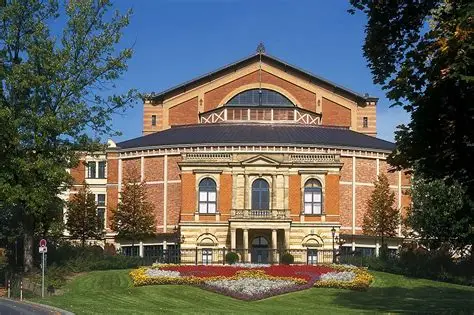
A century later, Richard Wagner arrived and built his own theater on the Green Hill just outside the old town: the Festspielhaus, purpose-built with three storeys of mechanical works hidden below the stage to accommodate his massive theatrical sets. It remains the venue for the annual Bayreuth Festival, drawing Wagner devotees from around the world every summer. Wagner's actual home, not far from the Hofgarten, still stands and now houses the Richard Wagner Museum.
If you have extra time, the Sanspareil rock garden -- another Wilhelmine legacy, about 16 miles outside town near Hollfeld -- is worth the detour: naturally fantastic rock formations paired with a deliberately ruined-looking stone theater.
What to See
The Margravial Opera House, the Festspielhaus (Wagner Festival Theater, tour-only access), the Richard Wagner Museum, and the Hofgarten.
Food
Franconian tavern food throughout the old town; Maisel's Bier-Erlebnis-Welt offers a brewery museum experience for one of Germany's well-known wheat beer producers.
Tickets
Margravial Opera House: 5-20 euros depending on tour/museum combination. The Hermitage gardens are free.
Best Time to Visit
Spring through fall for the gardens and outdoor sights; summer specifically if you want to experience the Festival atmosphere (even without tickets to a performance).
Local tip: The Margravial Opera House can close temporarily for event rehearsals -- check ahead. Actual Bayreuth Festival tickets are notoriously hard to get and booked years in advance, but the city and its sights are worth visiting regardless of festival timing.