

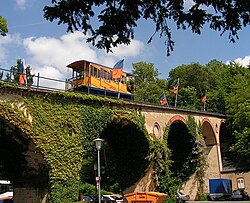
You ride a rail car up the Neroberg hill on a funicular with no engine at all — no motor, no electricity, just 7,000 liters of water and gravity, the same system that's been running since 1888 — and it sums up Wiesbaden well: genuinely elegant, a little old-fashioned in the best way, and full of details most visitors never expect from a place they think of mainly as a base community. If you're stationed at USAG Wiesbaden, this isn't a day-trip destination — it's home. But it's also a legitimately beautiful 19th-century spa city that drew European royalty for generations, and it's worth actually exploring rather than just passing through.
This is not just the base you happen to live near.
Wiesbaden is the Nerobergbahn (one of the last operating water-ballast funiculars in the world, genuinely unique engineering). It's the Kurhaus (a grand belle époque spa building with its own casino, formal gardens, and a genuinely impressive interior). It's thermal springs (the reason this became a spa town in the first place, still visible and steaming in the city center). And it's a real, livable European city — worth getting to know beyond the commissary and the gate.
Here's everything you need to know.
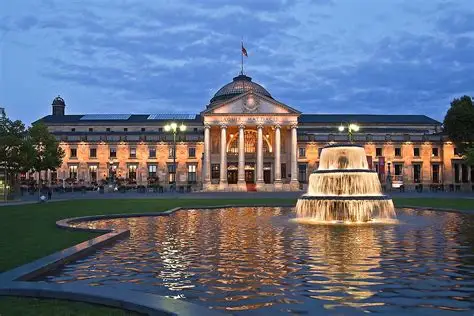
The Wiesbaden Moments That'll Stay With You
Riding the Nerobergbahn A funicular powered entirely by water and gravity — no motor at all — climbing to a lookout point over the city and the Rhine valley. Genuinely one of the more charming pieces of 19th-century engineering still in daily operation anywhere.
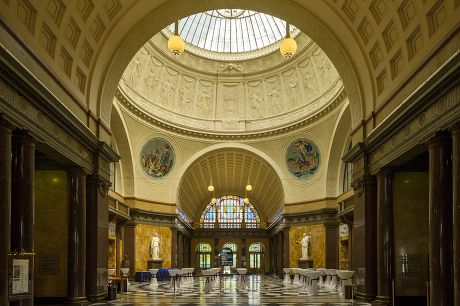
Standing in the Kurhaus's Grand Hall A genuinely impressive belle époque interior, home to the city's casino — you don't need to gamble to appreciate the room itself.
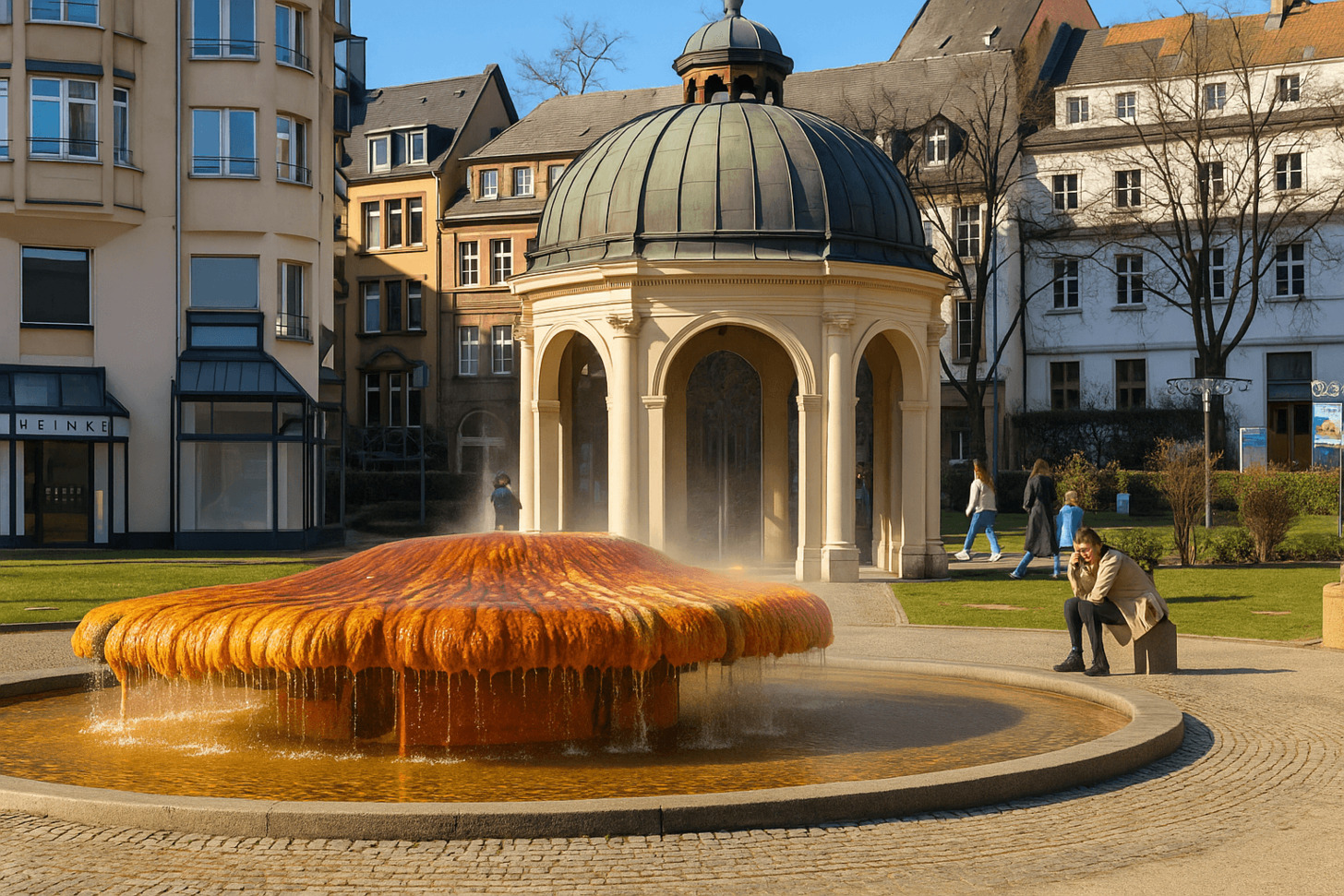
Watching Steam Rise from the Kochbrunnen A public hot spring fountain right in the city center, still steaming visibly — the literal reason Wiesbaden became a spa destination centuries ago.
Realizing How Much There Is Beyond the Base For anyone stationed here, actually walking the old town, the Kurpark, and the Neroberg beyond the immediate base area reveals a genuinely elegant European city hiding in plain sight.
A Night in the Bermuda Dreieck Wiesbaden's own "Bermuda Triangle" — a compact nightlife district of bars and pubs where, as the old joke goes, plenty of nights (and a fair amount of money) simply disappear. It's been part of Wiesbaden's after-dark identity for decades, with a real history of legendary, since-closed bars and clubs that locals still talk about.
Getting There and Getting Around
Wiesbaden is a base community — home to USAG Wiesbaden — sitting directly across the Rhine from Mainz, with strong rail connections to Frankfurt. The city center, Kurhaus, and Kurpark are all walkable from each other; the Neroberg funicular station is a short trip from the city center.
Getting around once you're there:
- The city center, Kurhaus, and Kurpark are all within easy walking distance of each other
- The Nerobergbahn funicular station sits at the edge of the Nerotal valley, a short walk or bus ride from downtown
- Mainz is directly across the Rhine, an easy add-on if you want to pair both cities in one visit
The Top Attractions
Nerobergbahn One of the last operating water-ballast funiculars in the world, running since 1888 with no motor at all — the downhill car fills with up to 7,000 liters of water to counterweight and pull the uphill car via a cable, purely on gravity. The 3.5-minute ride climbs to a lookout over the city, the Rhine valley, and the surrounding vineyards.
Kurhaus A grand belle époque spa building at the edge of the Kurpark, home to the Spielbank Wiesbaden casino and a genuinely impressive columned entrance hall — worth seeing even without any interest in gambling.
Kochbrunnen A public fountain in the city center where Wiesbaden's hot mineral springs are visibly accessible, steam rising off the water — the literal source of the city's centuries-old identity as a spa town.
Marktkirche A tall, red-brick neo-Gothic church anchoring the market square in the old town — Wiesbaden's tallest church and a good landmark for orienting yourself in the city center.
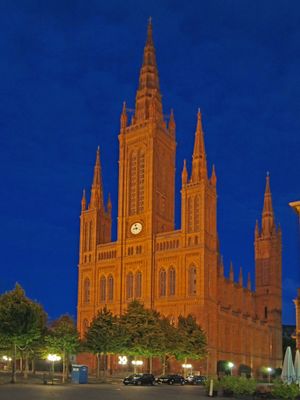
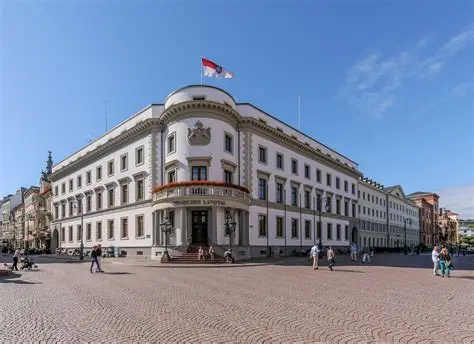
Stadtschloss (City Palace) Right on the same historic square as the Marktkirche, the former residence of the Dukes of Nassau — built 1837-42, damaged in WWII, and rebuilt as the seat of the Hessian State Parliament since 1946. Wiesbaden has been the capital of the state of Hesse since that same year, and this palace is the physical reason why: it's genuinely striking to realize a real state government sits in a 19th-century ducal palace rather than a modern office building.
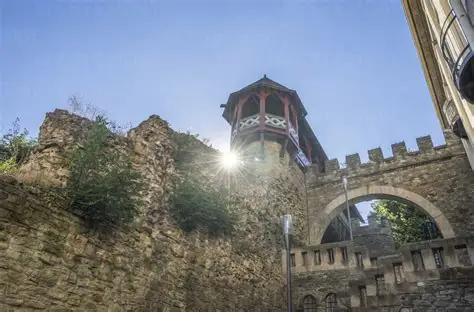
Heidenmauer A surviving stretch of Roman-era defensive wall running through the city center, one of the oldest visible structures in Wiesbaden — and tied to genuine medieval conflict with the neighboring city across the river: in 1242, the Archbishop of Mainz had the free imperial city of Wiesbaden burned down. Centuries of shared and contested history between these two cities sit right at the base of this old stone wall.
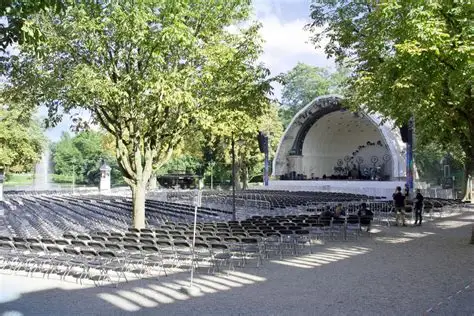
Bowling Green and the Kurmuschel Bandstand A large formal green space right in front of the Kurhaus, home to a historic shell-shaped outdoor bandstand (the Kurmuschel) that still hosts concerts and events — this stretch of lawn has hosted major acts including Elton John, Sting, and Eric Clapton over the years, alongside more traditional orchestral performances.
The Bermuda Dreieck
Wiesbaden's nightlife district has its own "Bermuda Triangle" nickname, and it's a genuine, decades-old part of the city's after-dark culture — a compact area historically dense with bars and clubs, some of them legendary among longtime locals even after closing.
The Green Walking Man
Near the Kurhaus colonnade stands one of Wiesbaden's more unusual public art pieces: a large, bright green statue of a man mid-stride, wearing a hat, with "Grenzen überwinden" ("overcoming boundaries") inscribed on its base. It's a striking, easy-to-photograph landmark right in one of the city's most-visited areas — worth pointing your camera at even if you don't know the full story behind it.
Shopping in the City Center
Wiesbaden's pedestrian shopping streets (centered on Kirchgasse and the surrounding old town) mix international retail chains with independent local shops — a genuinely pleasant place to spend an afternoon browsing, especially combined with a stop at one of the old town's cafés.
Christmas Market
Wiesbaden's Sternschnuppenmarkt ("Shooting Star Market") sets up around the Marktkirche, Schlossplatz, and Stadtschloss — the historic government square doing double duty as a genuinely pretty Christmas market backdrop, with the state parliament building lit up behind the stalls.
English is spoken widely given the substantial American community connected to USAG Wiesbaden. The Nerobergbahn runs seasonally (spring through early November) and is closed in winter due to freezing risk — worth checking current dates if planning a visit specifically around it. Mainz sits directly across the river and makes an easy, genuinely worthwhile add-on if you haven't explored it yet.
When to Visit
Spring through Fall — The Nerobergbahn is running, the Kurpark gardens are at their best, comfortable weather throughout.
Summer — Warm and pleasant, good season for the funicular and outdoor spaces.
Winter — The Nerobergbahn is closed for the season, though the Kurhaus and city center remain worth a visit regardless.
Quick Wiesbaden Checklist
- Ride the Nerobergbahn up to the lookout point
- Walk through the Kurhaus's grand hall
- See the Kochbrunnen's steaming hot spring
- Visit the Marktkirche and the Stadtschloss on the same historic square
- Walk a stretch of the Heidenmauer Roman wall
- Catch a concert (or just see) the Kurmuschel bandstand at Bowling Green
- If visiting in December: the Sternschnuppenmarkt around Schlossplatz
- Cross the Rhine to Mainz if you haven't explored it yet
The Bottom Line
Wiesbaden is more than the base you're stationed at — it's a genuinely elegant 19th-century spa city with a unique piece of still-operating engineering in the Nerobergbahn, real belle époque architecture in the Kurhaus, and visible thermal springs that explain why European royalty came here for generations. Worth exploring properly, not just passing through.
Planning day trips from your base? See our Day Trips guide for more destinations within driving distance, and our PCS Guide to Germany for everything else about settling in.