

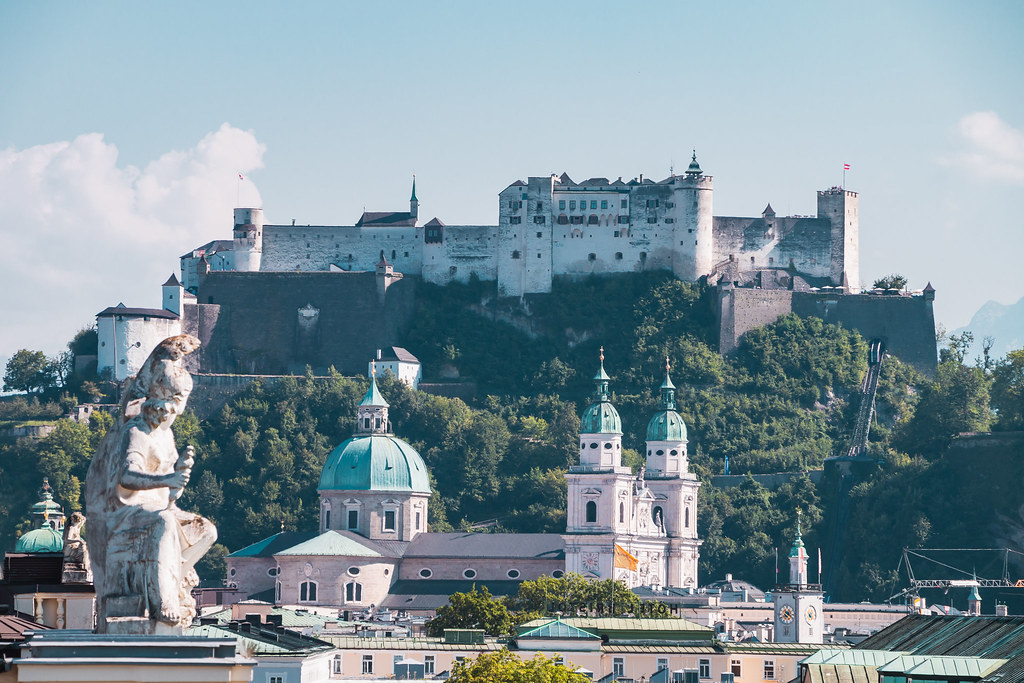
You cross the Salzach River and the whole city opens up in front of you — the fortress of Hohensalzburg perched on its hill above the old town, baroque church domes catching the light, the Alps rising in the near distance like they're part of the skyline rather than something you'd have to travel further to see. Salzburg is compact enough to feel intimate and grand enough to genuinely impress, a combination that's rarer than it sounds. This is Mozart's birthplace, the real filming backdrop for The Sound of Music, and one of the best-preserved baroque old towns anywhere in Europe — and it sits close enough to the Bavaria training-area cluster (Grafenwöhr, Vilseck, Ansbach, Hohenfels) to make a genuinely reasonable weekend pairing with Nuremberg.
This is not just a movie backdrop.
Salzburg is Hohensalzburg Fortress (one of the largest, best-preserved medieval castles in Europe, looking down over the entire old town). It's Mozart's city (his birthplace is a working museum, and his music is everywhere from concert halls to gift shop chocolate boxes). It's Sound of Music country (real filming locations scattered through the city and surrounding countryside, if that's your thing). And it's genuinely beautiful in a way that photographs undersell.
Here's everything you need to know.
The Salzburg Moments That'll Stay With You
First View of Hohensalzburg from the Old Town The fortress sits on a hill directly above the historic center, visible from almost everywhere in the old town — it's one of those views that photographs never quite capture the scale of.
Riding the Funicular Up to the Fortress A short, steep ride up the hill instead of the walking climb, with the whole city and the surrounding mountains opening up below as you go.
Standing in Mozart's Birthplace The building where he was actually born, now a museum with real instruments and family artifacts — a genuinely moving stop even if you're not particularly into classical music.
Wandering Getreidegasse The old town's main shopping street, narrow and lined with elaborate wrought-iron guild signs (including one for a McDonald's, done in the same traditional style — a small, funny detail worth noticing).
Getting There and Getting Around
Salzburg sits right on the German-Austrian border, making it a natural pairing with the Bavaria training-area cluster — closer to Grafenwöhr, Vilseck, Ansbach, and Hohenfels than most other international destinations on this list, and an easy addition to a Nuremberg trip if you want to combine both in one longer weekend. Salzburg also has its own airport with connections to major European hubs if you're coming from further away. The old town itself is compact and pedestrian-friendly; a car isn't necessary once you're there, and central parking is limited like most preserved historic cores.
Getting around once you're there:
- The old town is entirely walkable — most major sights sit within a 15-20 minute walk of each other
- The funicular (Festungsbahn) up to Hohensalzburg Fortress saves the steep climb and is worth it even if you're otherwise a dedicated walker
- City buses cover anything outside the immediate historic core, including several Sound of Music filming locations further out
The Top Attractions
Hohensalzburg Fortress One of the largest and best-preserved castles in Europe, dominating the skyline from its hill above the old town. The funicular up is the easy option; the views over the city and surrounding mountains from the top are the payoff, along with museum exhibits inside the fortress itself.
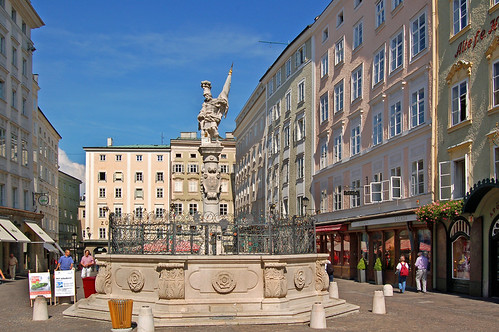
Mozart's Birthplace The actual building where Wolfgang Amadeus Mozart was born in 1756, now a museum covering his early life and family, with genuine period instruments and artifacts on display.
Mirabell Palace and Gardens Baroque palace gardens that appear directly in The Sound of Music's "Do-Re-Mi" sequence, free to walk through and a genuinely lovely stop even without the movie connection — formal hedges, fountains, and a good angle back toward the fortress.
Salzburg Cathedral (Dom) A striking baroque cathedral at the heart of the old town, with an interior scale that catches most first-time visitors off guard.
Salzach River Walk A pleasant riverside walk connecting the old town to Mirabell Palace, with some of the best photo angles of the fortress and old town skyline together.
Sound of Music Sites
Salzburg leans into its Sound of Music connection, and for good reason — several real filming locations sit in and around the city, from Mirabell Gardens within the old town to lakes and countryside further out. Dedicated Sound of Music bus tours run regularly if you want the full circuit; if you're short on time, Mirabell Gardens alone covers the most walkable and recognizable location.
Practical Tips
English is spoken widely in the tourist core. Salzburg is genuinely hilly in places — the walk up to the fortress (if you skip the funicular) is a real climb, worth planning for if traveling with young kids or anyone who'd prefer to avoid it. The old town gets busy in peak summer season and around major festivals (Salzburg hosts a well-known summer music festival that draws significant crowds and elevated accommodation prices) — worth checking the calendar before booking if you want a quieter visit.
When to Visit
Spring and Early Fall — Good weather, meaningfully fewer crowds than summer, comfortable for the fortress walk.
Summer — Warm and at its most lively, but also Salzburg's peak season, especially during the summer festival period — expect crowds and higher prices.
December — Salzburg's Christmas markets, set against the baroque old town and the fortress above, are a genuinely beautiful reason to visit in winter.
Quick Salzburg Checklist
- Take the funicular up to Hohensalzburg Fortress
- Visit Mozart's Birthplace
- Walk through Mirabell Palace Gardens
- Wander Getreidegasse and spot the guild signs
- Walk the Salzach riverside path for fortress views
The Bottom Line
Salzburg pairs naturally with a Nuremberg trip for anyone stationed near the Bavaria training-area cluster — close enough for a genuinely easy border crossing, distinctly Austrian rather than a smaller version of a German city, and beautiful enough that most visitors leave wishing they'd budgeted more time than they gave it.
Planning day trips from your base? See our Day Trips guide for more destinations within driving distance, and our PCS Guide to Germany for everything else about settling in.