

You step off the elevator at street level in Marburg's Oberstadt and the modern city you just left disappears completely — narrow cobblestone lanes climbing a steep hillside, half-timbered houses leaning at odd angles, a castle looming above it all. That's the genuinely unusual thing about Marburg: at ground level, near the river, it looks like an ordinary modern German town. Take one of the public elevators or funiculars up the hillside, though, and you're suddenly standing in a near-perfectly preserved medieval old town that feels like a completely different place. Locals sometimes describe it as two cities stacked on top of each other, and that framing is honestly the best way to understand what makes Marburg worth the visit.
This is not a one-layer city.
Marburg is the Oberstadt (the upper old town, a steep, cobblestoned medieval core reached by public elevators built directly into the hillside). It's Marburg Castle (a hilltop fortress overlooking the whole valley, with genuine historical weight as a site tied to the Protestant Reformation). It's a real university town (Philipps-Universität Marburg is one of Germany's oldest universities, keeping the city young, affordable, and lively). And it's a genuinely different kind of "two cities in one" experience from anywhere else on this list.
Here's everything you need to know.
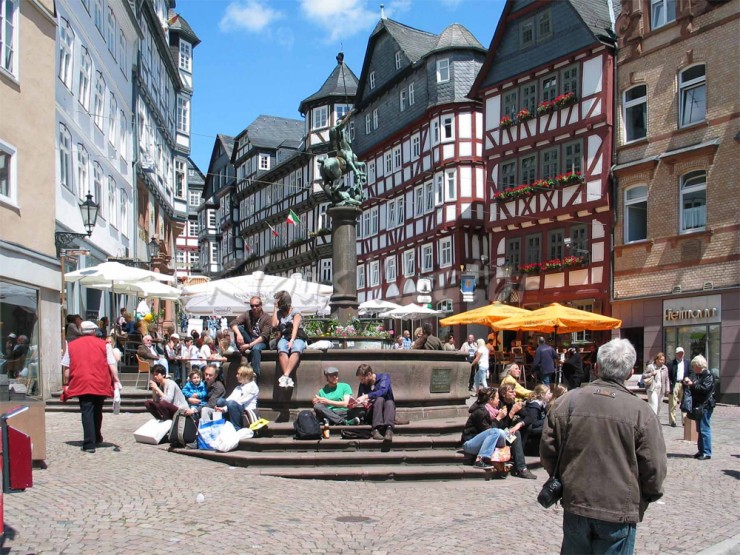
The Marburg Moments That'll Stay With You
Taking the Elevator Up to a Different Century Riding one of Marburg's public hillside elevators from the modern lower town and stepping out directly into the medieval Oberstadt — the contrast is genuinely disorienting in the best way.
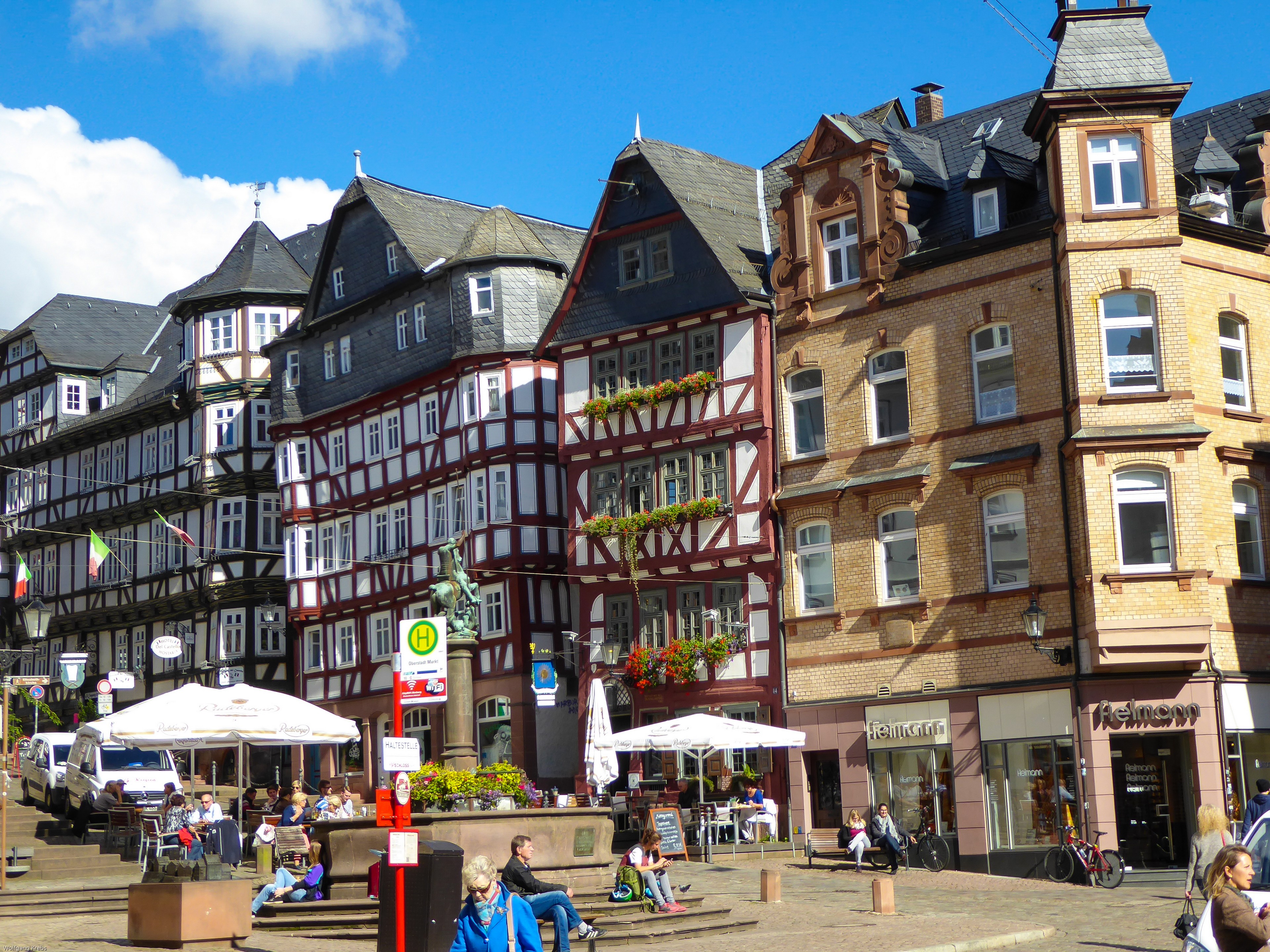
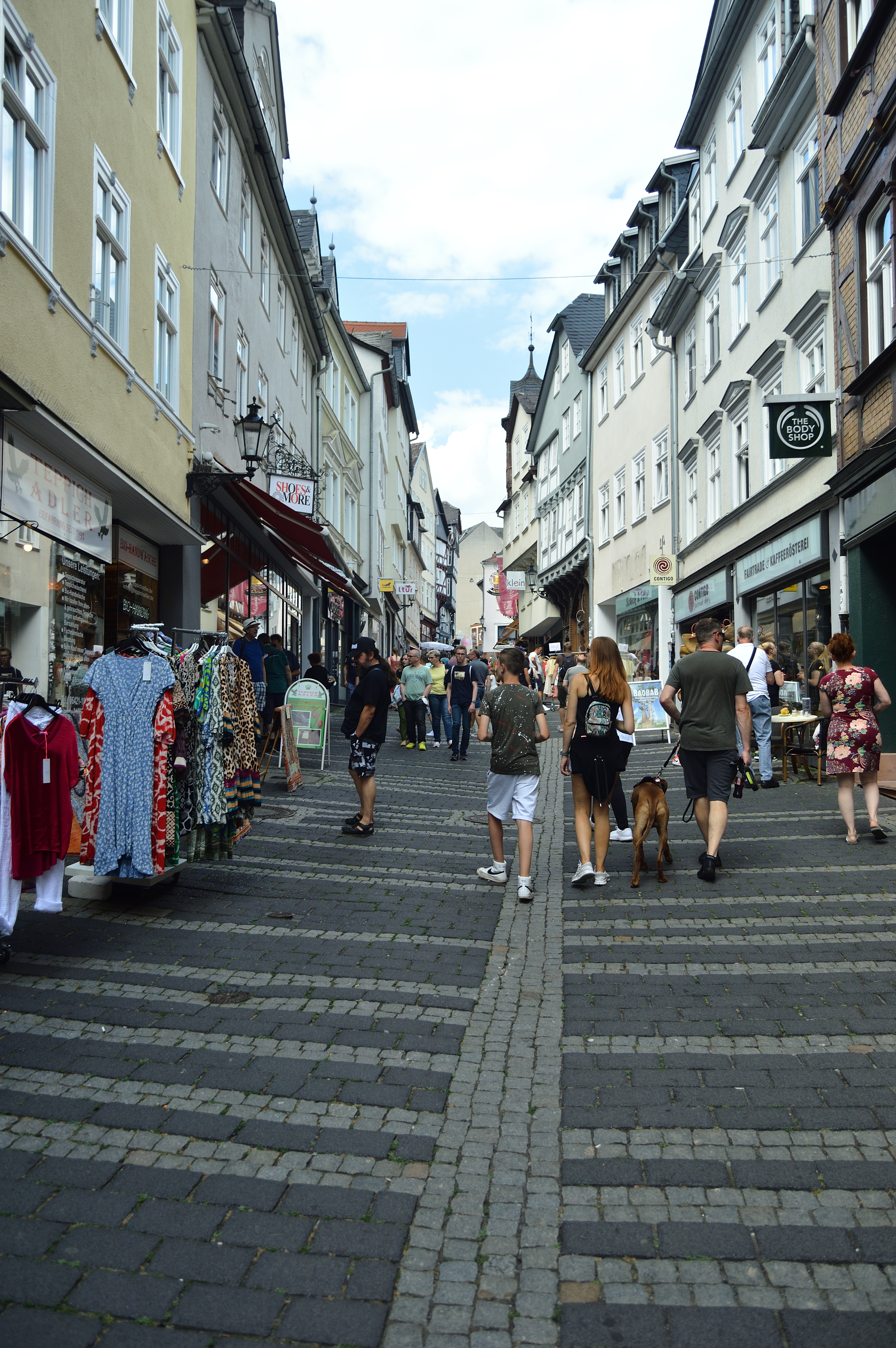
Walking the Steep, Crooked Lanes of the Oberstadt Half-timbered houses leaning at odd angles on a hillside steep enough that some streets are more like staircases — this old town has a physical character unlike Germany's flatter medieval centers.
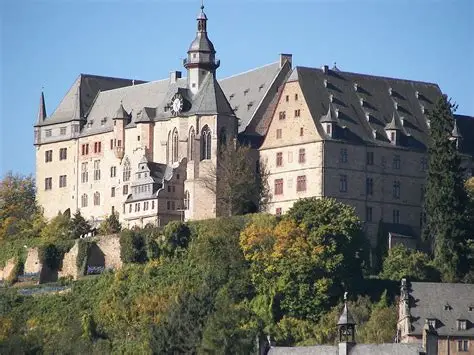
Standing at Marburg Castle, Looking Down The view over the Oberstadt's rooftops and the Lahn valley below from the castle grounds is one of the better hilltop views in Hesse.
Feeling the University Town Energy A large student population keeps Marburg's cafés, bars, and streets genuinely lively and affordable — a different texture from the more purely tourist-oriented towns elsewhere on this list.
Getting There and Getting Around
Marburg sits in Hesse, north of Frankfurt, with good rail connections making it reachable without necessarily driving. The lower town near the Lahn river is flat and ordinary; the Oberstadt sits significantly higher on the hillside, connected by a series of public elevators and stairs built specifically to manage the steep climb.
Getting around once you're there:
- The lower town is flat and walkable on its own
- Public elevators (Aufzüge) built into the hillside carry you up to the Oberstadt without the full stair climb — genuinely worth using rather than skipping
- The Oberstadt itself is small enough to explore entirely on foot once you're up there
The Top Attractions
The Oberstadt (Upper Old Town) Marburg's medieval core, perched on a steep hillside above the modern lower town — narrow, crooked lanes and half-timbered houses that feel like stepping into a different century, reached by public elevators built directly into the hillside.
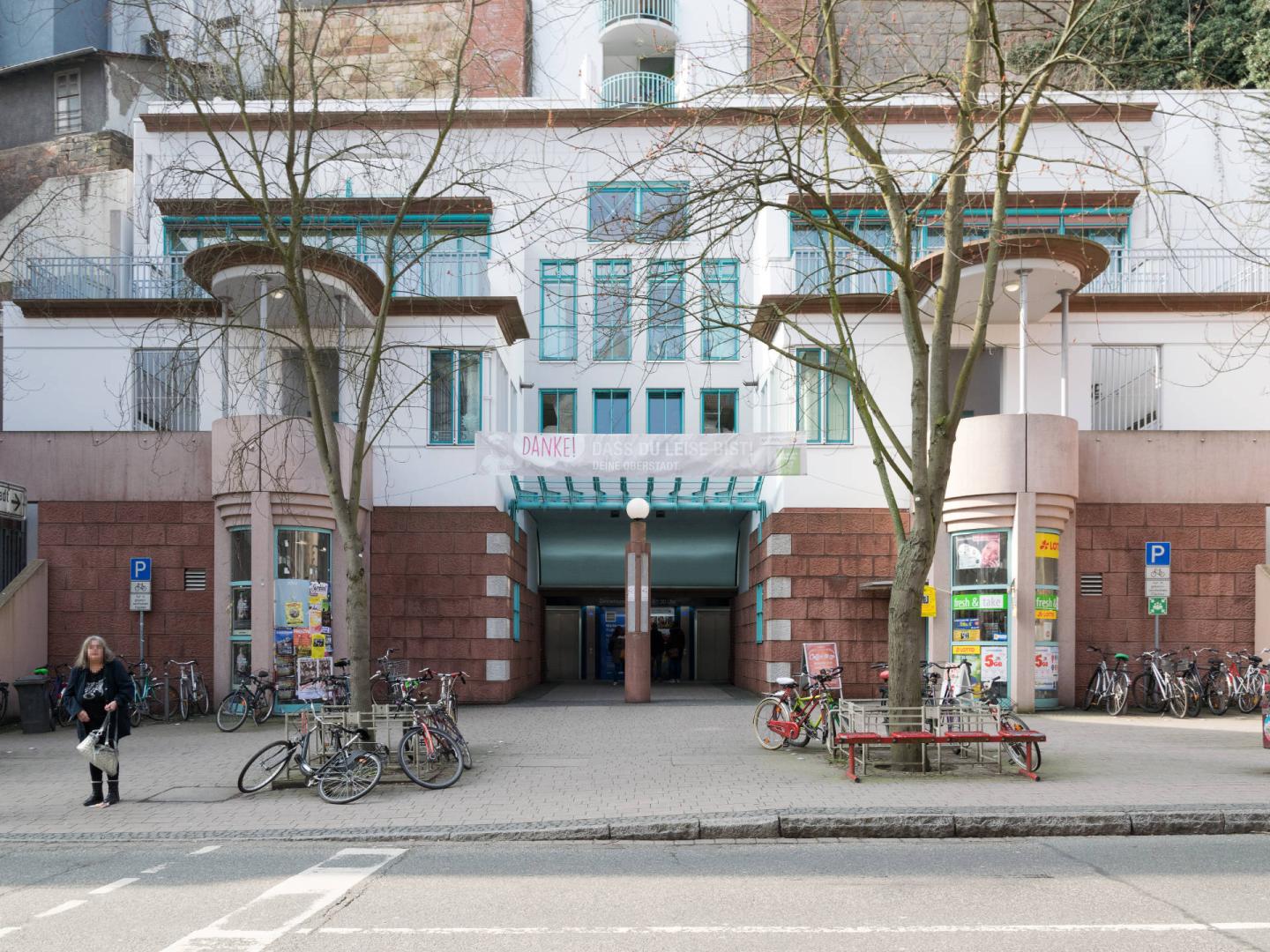
Oberstadtaufzug (The Public Elevators) The specific mechanism that makes Marburg's "two cities" character work: a set of public elevators at Pilgrimstein, near the Lahn river in the lower town, that climb the roughly 28-meter height difference up to the Oberstadt. The cabins and connecting walkway are glazed, so you get a real view as you rise — arriving through the Elwert-Passage, a passage that runs directly beneath a half-timbered house and drops you right into the historic old town. Simple, functional, and honestly one of the more memorable ways to enter a medieval city center anywhere in Germany.
The Lower Town (Unterstadt) Down at street level near the Lahn river, Marburg looks like an entirely ordinary modern German town — flat streets, regular shops, nothing that hints at the medieval city sitting on the hillside above it. Worth a look specifically for the contrast: this is the "before" to the Oberstadt's "after," and seeing both is what makes the two-cities framing click.
Marburg Castle (Landgrafenschloss) A hilltop fortress overlooking the entire Oberstadt and Lahn valley, historically significant as the site of the 1529 Marburg Colloquy — a key meeting in the Protestant Reformation between Martin Luther and Huldrych Zwingli.
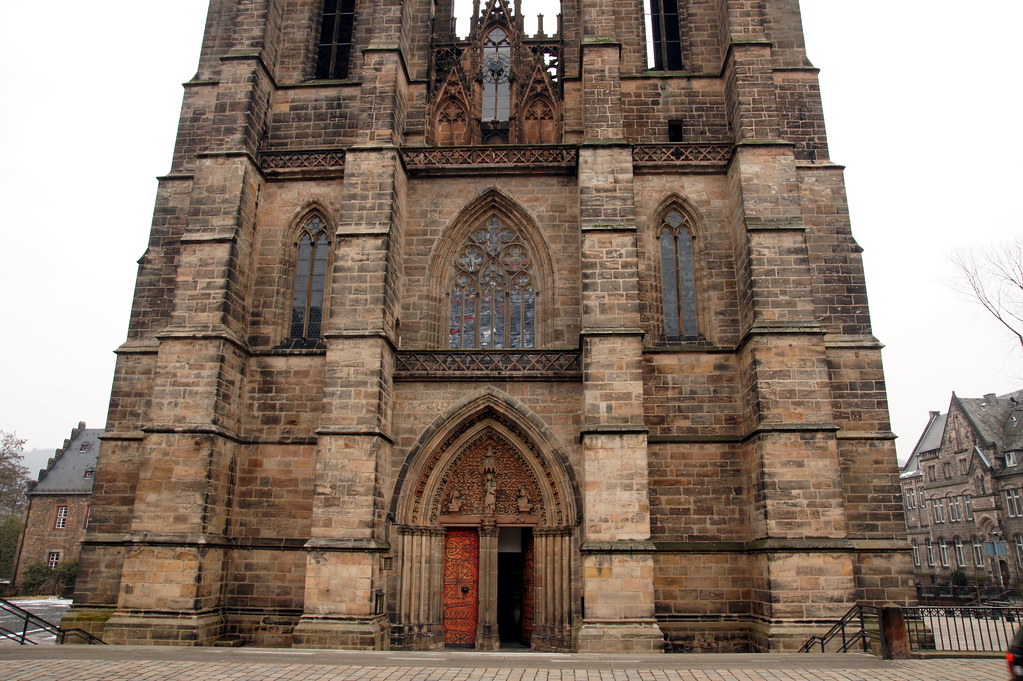
St. Elizabeth's Church One of the earliest Gothic churches built in Germany, and an important pilgrimage site tied to Saint Elizabeth of Hungary — a genuinely significant medieval church worth a visit even for those not particularly drawn to religious sites.
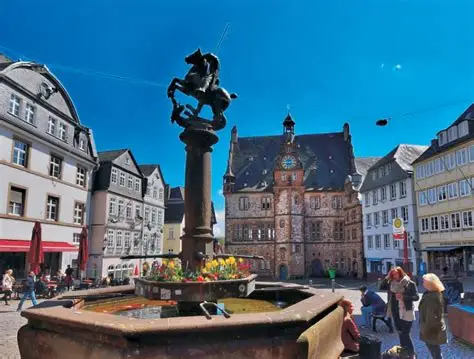
Marburg Market Square (Marktplatz) The Oberstadt's central square, ringed by half-timbered buildings and anchored by the historic town hall — a good place to sit with a coffee and take in the old town's atmosphere.
University Town Life
Philipps-Universität Marburg is one of Germany's oldest universities, and its large student population genuinely shapes the city — cafés, bars, and food tend to be more affordable and less tourist-oriented than in more purely historic towns, giving Marburg a livelier, younger energy than its medieval architecture might suggest.
Practical Tips
English is spoken reasonably well, especially around the university areas. The Oberstadt's steep lanes mean genuinely comfortable shoes matter, and the public elevators are worth using rather than treating as optional — they solve a real physical challenge, not just a convenience. Marburg makes an easy day trip or a good stop if you're already traveling through Hesse.
When to Visit
Spring and Fall — Good weather for the Oberstadt's steep lanes and castle grounds, comfortable walking conditions.
Summer — Warm and lively with the university's outdoor café culture in full swing (though quieter during semester breaks).
Winter — Quiet and atmospheric, with the Oberstadt's Christmas market adding some seasonal charm.
Quick Marburg Checklist
- Ride the Oberstadtaufzug up through the Elwert-Passage
- Walk the steep, crooked lanes of the old town
- Look back down at the ordinary lower town to appreciate the contrast
- Visit Marburg Castle for the valley view
- See St. Elizabeth's Church
- Sit in the Marktplatz and take in the university-town energy
The Bottom Line
Marburg's "two cities stacked on top of each other" character makes it a genuinely unusual stop compared to anywhere else on this list — a real, functioning university town at ground level, and a near-perfectly preserved medieval hillside town one elevator ride above it.
Planning day trips from your base? See our Day Trips guide for more destinations within driving distance, and our PCS Guide to Germany for everything else about settling in.