
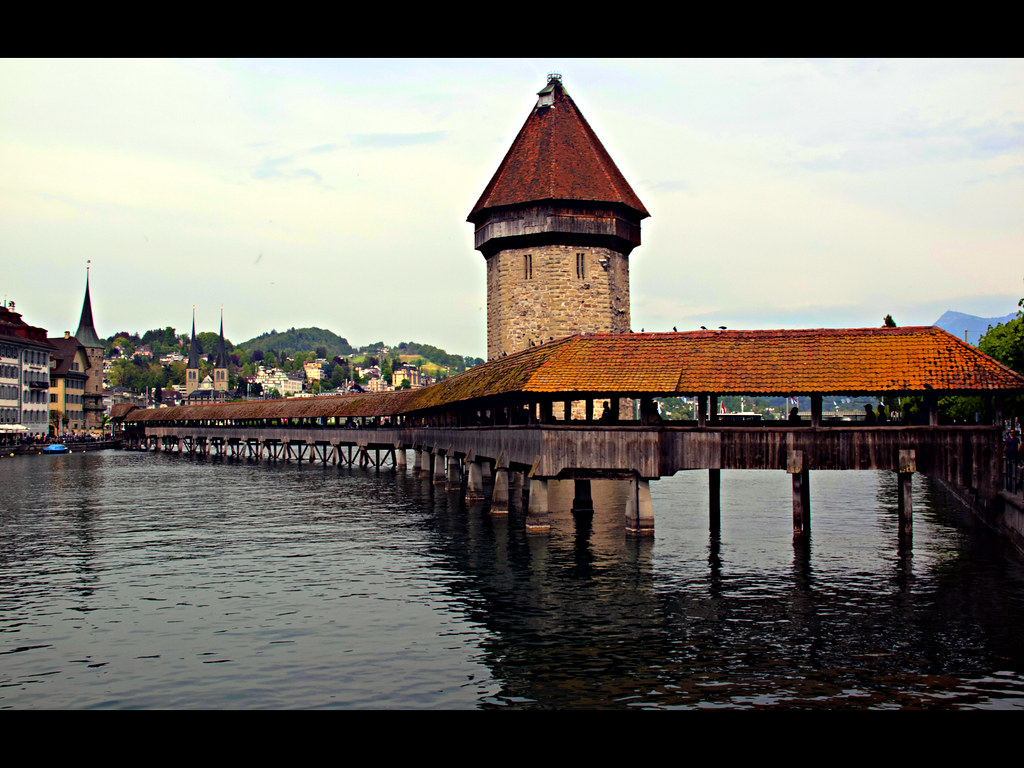
You arrive in Lucerne and immediately think someone edited the saturation. The lake is impossibly blue. The mountains—Pilatus, Rigi—rise dramatically in every direction. The Chapel Bridge (Kapellbrücke) stretches across the Reuss River, covered wooden bridge with flowers cascading from window boxes. You walk the Old Town cobblestones, past painted buildings and fountains that belong in fairy tales. You find the Lion Monument—massive dying lion carved into rock face, Mark Twain called it "the most mournful and moving piece of stone in the world." You take the cogwheel train up Mount Pilatus (world's steepest), stand on the summit at 2,132 meters, and realize every direction shows a different postcard. You eat fondue that makes you understand why Swiss people never left Switzerland. You buy chocolate you didn't plan to buy. You take a lake cruise to villages that shouldn't be this beautiful. This is Lucerne—the Switzerland of your imagination made real.
This is not Zurich or Geneva.
Lucerne is quintessential Switzerland (if you picture Switzerland, you're picturing Lucerne). It's the Chapel Bridge (1333, oldest covered wooden bridge in Europe, Instagram famous for good reason). It's Alpine drama (Pilatus, Rigi, Titlis—three iconic mountains minutes away). It's the Lion Monument (carved from sandstone cliff, honors Swiss Guards, profoundly moving). It's lake magic (Lake Lucerne, boat cruises, mountain reflections). And it's expensive but worth it—this is Switzerland at its most beautiful.
I've watched tourists literally stop walking when they see the Chapel Bridge view for the first time. Every photo looks like a postcard because Lucerne actually looks like that. You'll take the cogwheel train up a mountain. You'll walk medieval bridges. You'll eat fondue by the lake. You'll understand why Switzerland tops every travel bucket list.
Here's everything you need to know.
The Lucerne Moments That'll Stay With You
Chapel Bridge at Golden Hour You're walking along the Reuss River. The Chapel Bridge (Kapellbrücke) stretches before you—covered wooden bridge built in 1333, red geraniums spilling from every window box. The Water Tower rises from the river beside it. Golden hour light hits the mountains behind. You take 47 photos. Every single one is perfect. This is THE Lucerne postcard moment.
Summit of Mount Pilatus You rode the world's steepest cogwheel railway up 1,635 meters. Now you're standing at 2,132 meters on the summit of Mount Pilatus. You can see Lake Lucerne below, the Alps stretching forever in every direction. The air is thin and cold. The views are absurd. You understand why they call Switzerland "the playground of Europe." This is mountain magic.
The Lion Monument Surprise You walk to Löwendenkmal (Lion Monument). You're not sure what to expect—maybe a small statue? Then you turn the corner and there it is—a massive lion (10m long) carved directly into the sandstone cliff face, dying, in agony, protecting a shield. Mark Twain called it "the most mournful and moving piece of stone in the world." He was right. You stand there longer than planned, reading the story of the Swiss Guards who died defending Louis XVI during the French Revolution. This memorial hits different.
Old Town Wandering You're lost in Lucerne's Altstadt (Old Town). Cobblestone streets wind between painted buildings—frescoes depicting historical scenes cover facades. Fountains mark every square. Church towers rise everywhere. Cafés spill onto pedestrian streets. You're not even trying to navigate anymore—just following beauty. This is what "charming European Old Town" means.
The Fondue That Explains Switzerland You're sitting in a cozy restaurant, mountains visible through the window. The fondue pot arrives—bubbling Gruyère and Emmental cheese, white wine, kirsch. You dip bread. The cheese stretches impossibly long. The flavor is rich, complex, perfect. You suddenly understand why Swiss people stay in Switzerland. This fondue costs €30+ but you don't care. Some things are worth it.
Chapel Bridge – Lucerne's Icon
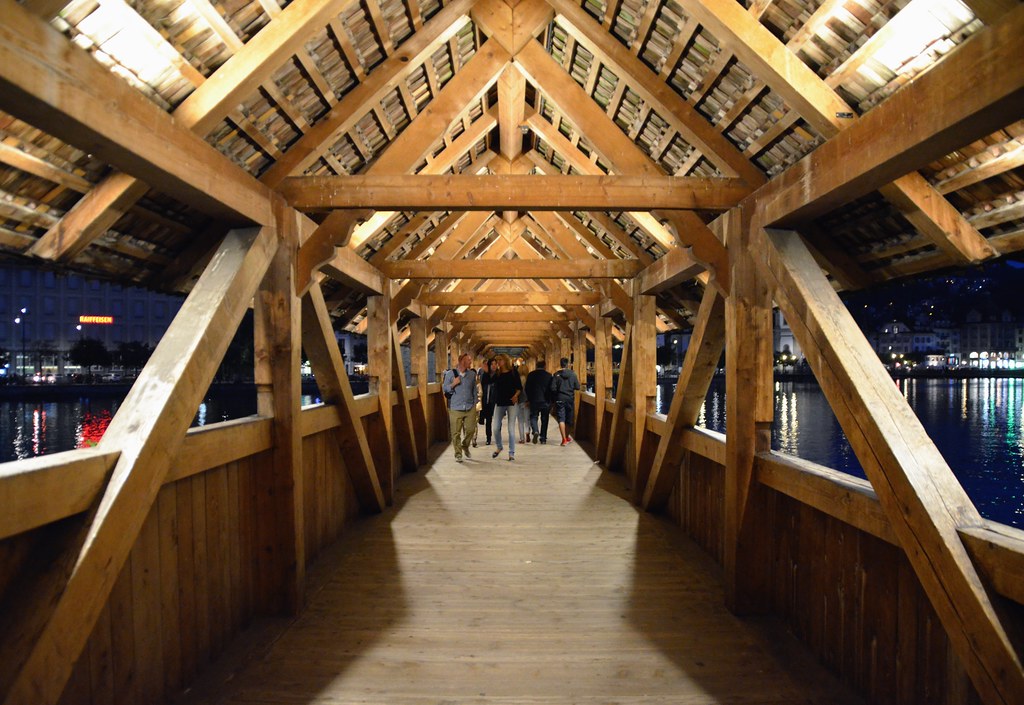
Kapellbrücke (Chapel Bridge) is Lucerne's symbol, Switzerland's most photographed monument, and Europe's oldest surviving covered wooden bridge.
The Facts:
Built: 1333 (nearly 700 years old)
Length: 204 meters (670 feet)
Purpose: Originally part of Lucerne's fortifications
Water Tower (Wasserturm): Octagonal tower rising from river beside bridge (predates bridge, built around 1300)
Paintings: 117 triangular paintings inside the bridge depicting Lucerne's history and patron saints (originally 158, fire in 1993 destroyed many)
The 1993 Fire: Devastating fire destroyed much of the bridge. Rebuilt in 1994. Most paintings were lost, some restored from photographs.
Why It's Special:
The Chapel Bridge isn't just a bridge—it's a journey through history. As you walk across, you can look up at the triangular paintings showing Lucerne's story from medieval times. The red geraniums in window boxes add color. The Water Tower beside it creates that iconic silhouette.
Photo spots:
From the lake promenade – Classic view with mountains behind
Golden hour (sunset) – Light hits perfectly
From Jesuitenplatz – Bridge with Pilatus in background
Evening – Bridge lit up, Water Tower glowing
Walking through – Don't just photograph it, walk it
Pro tips:
Go early morning – Fewer tourists, better light
Look up at paintings – Most tourists don't notice them
Walk both directions – Different views each way
Visit after rain – Reflections in wet pavement
Live Photo mode – Catch the swans swimming by
Cost: Free (it's a public bridge)
Time: 10 minutes to walk across, but you'll spend 30+ photographing
Lion Monument – Switzerland's Most Moving Memorial
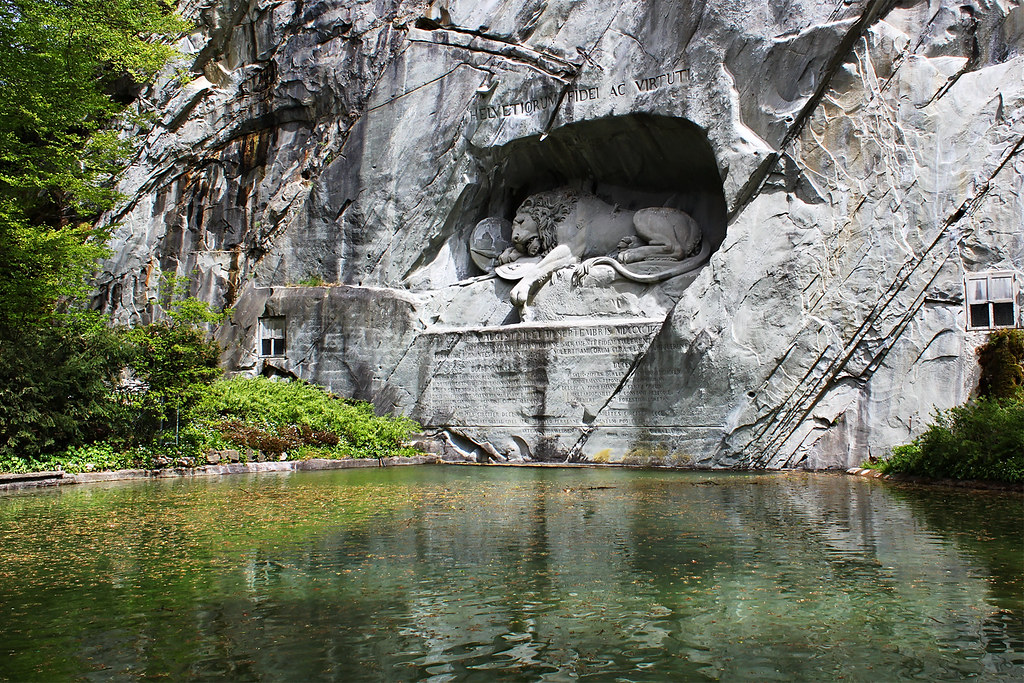
Löwendenkmal (Lion Monument) is a massive sculpture carved into a sandstone rock face. Mark Twain called it "the most mournful and moving piece of stone in the world."
The Story:
The dying lion commemorates the Swiss Guards who were massacred during the French Revolution in 1792. Over 700 Swiss mercenaries died defending King Louis XVI and Marie Antoinette at the Tuileries Palace in Paris. They held their oath to protect the royal family even as revolution swept France.
The Sculpture:
Size: 10 meters long, 6 meters high
Carved: 1820-1821 by Lucas Ahorn, designed by Bertel Thorvaldsen
Style: Carved directly into the cliff face (not attached sculpture)
Details: The lion lies dying, pierced by a spear, his paw resting on a shield with the fleur-de-lis (symbol of French monarchy). Beside it, a shield with the Swiss cross. The inscription reads "HELVETIORUM FIDEI AC VIRTUTI" (To the loyalty and bravery of the Swiss).
Why It Moves People:
The lion's face shows agony, nobility, and loyalty. The story behind it—soldiers dying to honor their oath even as the world changed around them—resonates. The scale and craftsmanship are stunning. But mostly, it's the emotion captured in stone.
Visiting:
Location: Löwenplatz (15-minute walk from Chapel Bridge)
Cost: Free (small park)
Time: 20-30 minutes (include reading the history)
Atmosphere: Quiet, reflective—respect the memorial
Photos: Allowed and encouraged
Pro tip: Read the history plaque before viewing the sculpture. The context makes it more powerful.
The Mountains – Alpine Adventures from Lucerne
Lucerne is surrounded by three iconic mountains, each offering different experiences.
Mount Pilatus ⭐⭐⭐ (The Must-Do)
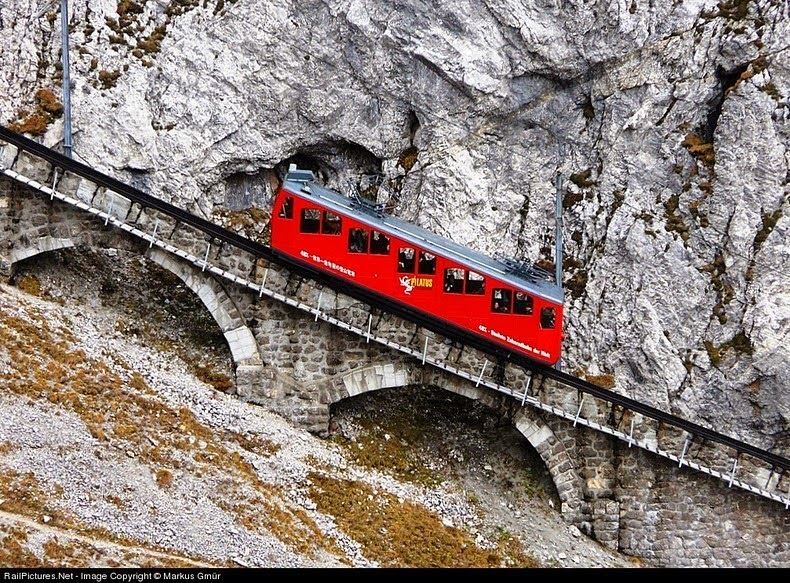
The world's steepest cogwheel railway climbs Mount Pilatus. This is Lucerne's signature mountain experience.
The Route (Golden Round Trip):
- Boat from Lucerne to Alpnachstad (1 hour cruise)
- Cogwheel railway up Pilatus (30 minutes, 48% gradient—steepest in the world)
- Summit at 2,132m – Multiple viewing platforms, restaurants
- Cable cars/gondolas down to Kriens
- Bus back to Lucerne (or walk 30 minutes)
Why it's amazing:
- The cogwheel climb – Impossibly steep, thrilling, safe
- Summit views – 360° Alps, Lake Lucerne, forever mountains
- Multiple platforms – Several peaks to explore at the top
- Dragon legend – Pilatus supposedly housed dragons (you'll see dragon everything)
Cost: CHF 72-112 depending on route (Swiss Travel Pass covers some)
Time: Half-day (5-6 hours for full Golden Round Trip)
Best for: First-timers, Instagram photos, "I climbed a Swiss mountain" experience
Pro tips:
Book cogwheel tickets advance – They sell out in summer
Bring layers – Summit is cold even in summer
Check weather – Don't go in fog/rain
Sit right side going up – Better views
Restaurant at top – Pricey but the view!
Mount Rigi ⭐⭐⭐ (The "Queen of Mountains")
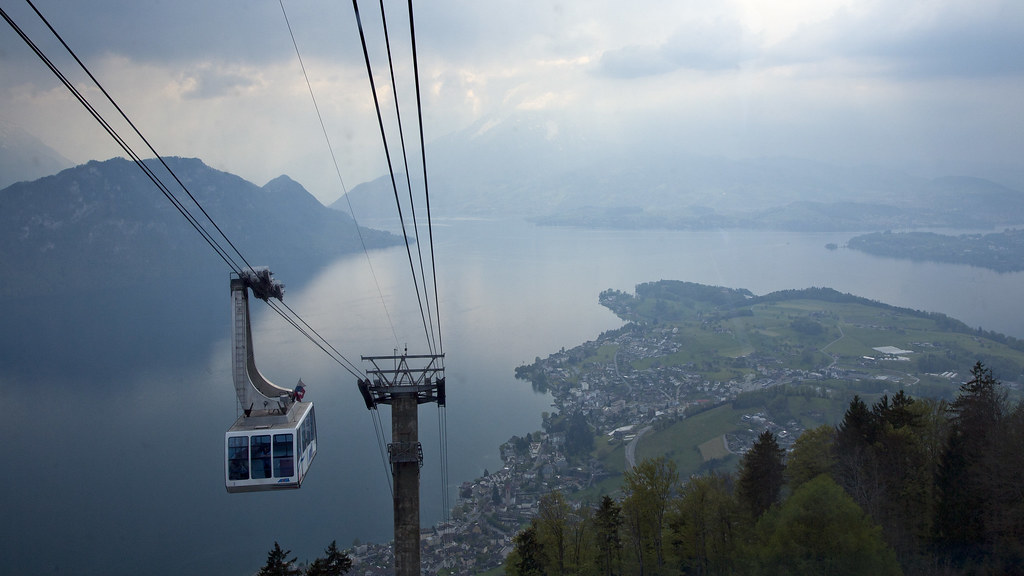
Rigi is called the "Queen of Mountains"—gentler, more accessible than Pilatus, stunning panoramic views.
The Route:
- Boat to Vitznau (1 hour)
- Cogwheel railway to summit (30 minutes)
- Summit at 1,798m – Walking trails, viewpoints
- Descend via Weggis or same route
Why choose Rigi:
- Hiking trails – Multiple routes at summit
- Less touristy – More locals, quieter
- Historic – First mountain railway in Europe (1871)
- Sunrise trips – Special early trains for sunrise views
Cost: CHF 72 round trip
Best for: Hikers, sunrise seekers, locals' choice
Mount Titlis ⭐⭐ (The Highest)
Titlis reaches 3,238m—highest mountain accessible from Lucerne. Features the Titlis Rotair (world's first rotating cable car).
The Experience:
- Rotating cable car – 360° views while ascending
- Glacier cave – Walk inside the glacier
- Cliff Walk – Suspension bridge at 3,041m
- Snow year-round – Glacier skiing even in summer
Location: Engelberg (45 minutes from Lucerne by train)
Cost: CHF 92 round trip
Best for: Extreme altitude seekers, glacier experiences, thrill-seekers
Which Mountain Should You Choose?
Pilatus – Most iconic, steepest railway, best "Swiss experience"
Rigi – Best for hiking, quieter, local favorite, great sunrise
Titlis – Highest, glacier experience, rotating cable car
My recommendation: Do Pilatus if you only have time for one. It delivers the quintessential Swiss mountain railway experience. If you have 2+ days, add Rigi.
Old Town (Altstadt) – Medieval Lucerne
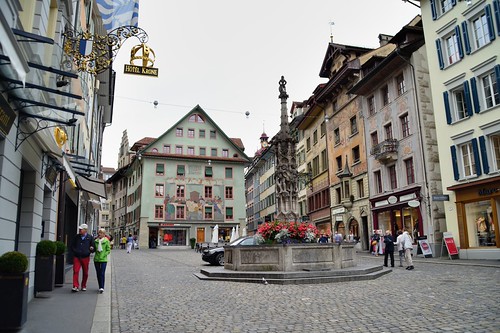
Lucerne's Altstadt (Old Town) is a fairy tale made real. Cobblestone streets, painted buildings, fountains, churches, squares.
What to See:
Weinmarkt (Wine Market Square) – Painted buildings with frescoed facades, fountain
Kornmarkt (Grain Market Square) – Another beautiful square with fountain
Museggmauer (City Wall) – Medieval wall with nine towers, you can walk parts of it and climb towers
Jesuit Church – Baroque beauty, stunning interior
Hofkirche (Court Church) – Twin Gothic spires, church organ is famous
Spreuer Bridge – Second covered wooden bridge (smaller than Chapel Bridge), has "Dance of Death" paintings
The Vibe:
The Old Town is car-free (pedestrian zone). You wander without plan. Every street reveals something beautiful—a fountain, a fresco, a view. Cafés and shops line the streets. Street musicians play. You're never lost, just wandering.
Pro tips:
Just wander – No map needed, it's small
Look up – The painted facades are stunning
Find the fountains – Each square has one
Climb a wall tower – Free, great views
Time needed: 2-3 hours to explore properly
Lake Lucerne – Switzerland's Most Beautiful Lake
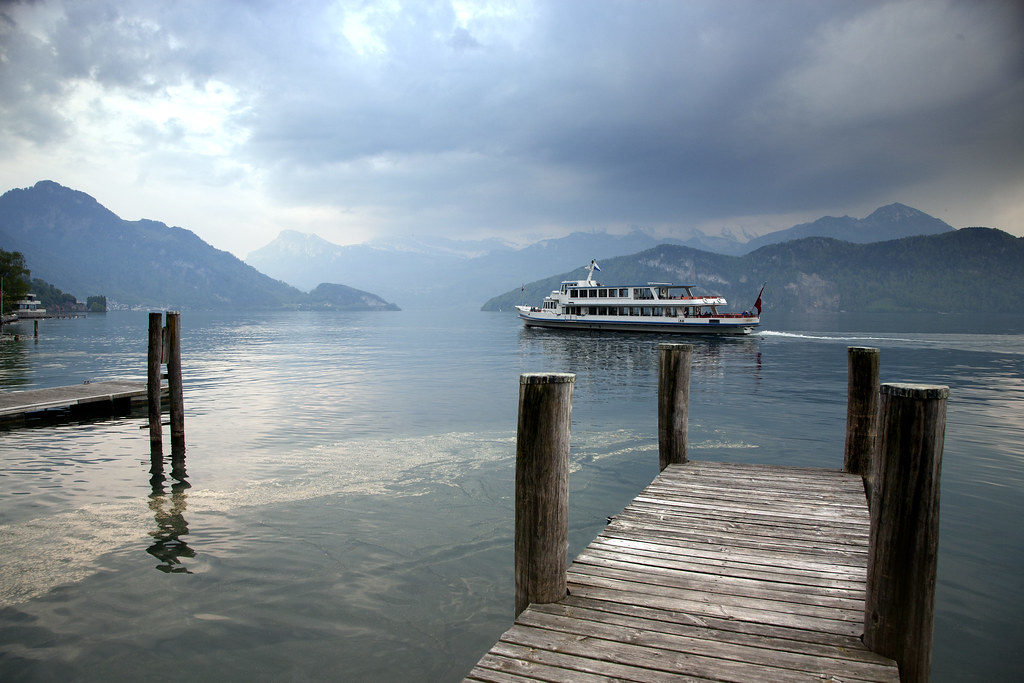
Vierwaldstättersee (Lake of the Four Forest Cantons—Lake Lucerne in English) surrounds the city. The lake is stunning—deep blue, mountain-backed, dotted with villages.
Lake Cruises
Multiple boat routes criss-cross the lake, stopping at villages, mountains, historic sites.
Popular routes:
Lucerne → Vitznau (for Rigi railway)
Lucerne → Alpnachstad (for Pilatus railway)
Lucerne → Flüelen (scenic, 3 hours)
Rütli Meadow (birthplace of Switzerland—historic site)
Cost: CHF 28-68 depending on route (Swiss Travel Pass covers)
Why take a cruise:
- Scenery – Mountains, villages, impossibly blue water
- Relaxation – Sit on deck with coffee/wine
- Transportation – Gets you to mountains/villages
- Historic boats – Some paddle steamers date to 1900s
Pro tip: First-class upgrade (CHF 10-15) gets you top deck, lounge, better views.
Swimming in the Lake
Locals swim in Lake Lucerne all summer. The water is clean, cold, refreshing.
Best spots:
- Seebad Lido Lucerne – Public beach/pool complex on lake
- Ufschötti – Grassy area near Old Town, locals swim here
- Any dock – Just jump in (locals do)
Water temp: 20-23°C in summer (68-73°F—cold but doable)
Food & Chocolate – Swiss Culinary Essentials
Fondue
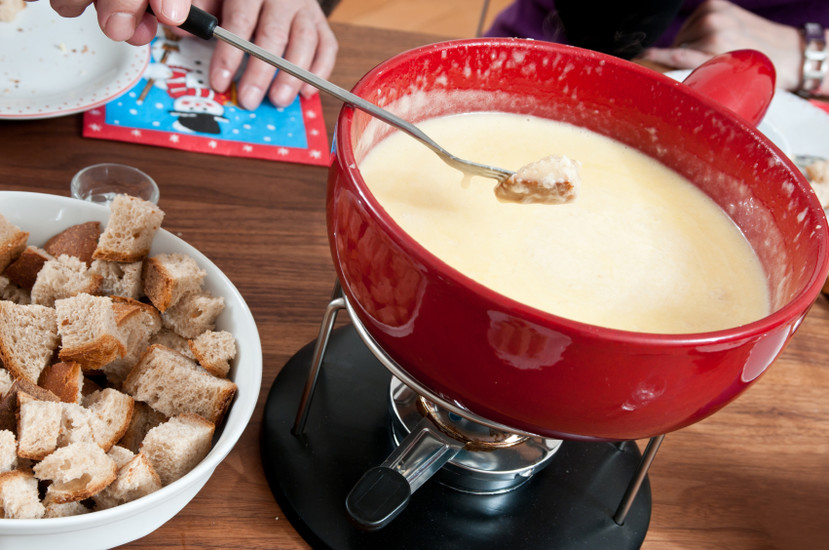
You cannot leave Lucerne without eating fondue. Melted Gruyère and Emmental cheese, white wine, kirsch, bread for dipping.
Where to eat it:
Stadtkeller – Traditional restaurant, sometimes has Swiss folklore shows
Fondue House – Specializes in fondue (obviously)
Rathaus Brauerei – Brewery with great fondue
Cost: CHF 25-35 per person
Pro tips:
Order white wine – Pairs perfectly with cheese
Swirl the bread – Figure-8 motion prevents cheese burning
Don't fill up on bread – Pace yourself
Meant for sharing – Communal pot, social meal
Swiss Chocolate
Switzerland makes the world's best chocolate. Lucerne has many chocolate shops.
Bachmann – Local confectionery, pralines and truffles
Max Chocolatier – Artisan chocolate shop, bean-to-bar
Läderach – Fresh chocolate, huge selection
Pro tip: Ask for samples—most shops offer them. Buy more than you planned. You'll regret not buying more.
Other Swiss Foods to Try:
Raclette – Melted cheese scraped onto potatoes, pickles, onions
Rösti – Swiss hash browns (crispy potato pancake)
Zürcher Geschnetzeltes – Veal in cream sauce (Zurich style but served everywhere)
Birchermüesli – Original Swiss muesli (invented in Switzerland)
Surviving Switzerland's Prices
Let's be honest: Switzerland is expensive. Lucerne is no exception. But it's manageable with planning.
What Things Cost:
Restaurant meal: CHF 20-40
Fondue: CHF 25-35
Coffee: CHF 4-6
Beer: CHF 6-8
Mountain excursion: CHF 70-110
Museum: CHF 10-15
Hotel: CHF 120-250/night
Budget Tips:
Swiss Travel Pass – If doing mountains + trains, it pays for itself
Coop/Migros supermarkets – Cheap lunch (sandwiches CHF 5-8)
Drink tap water – Swiss tap water is excellent (free)
Choose 1-2 mountains – Don't try to do all three
Buy chocolate at supermarket – Much cheaper than tourist shops
Walk everywhere – Lucerne is small and walkable
Daily budget:
- Budget: CHF 100-150 (hostel, supermarket food, one mountain)
- Mid-range: CHF 200-300 (hotel, restaurants, mountains)
- Splurge: CHF 400+ (nice hotel, fondue dinners, all mountains)
Getting to Lucerne
By Train:
From Zurich: 45 minutes (frequent trains)
From Zurich Airport: 1 hour direct
From Bern: 1 hour
From Interlaken: 2 hours
Swiss trains are punctual, clean, comfortable, scenic. Buy tickets at station or online (SBB app).
Getting Around Lucerne:
Walk – City center compact, everything walkable
Bus – If going to Lion Monument or further sights
Boat – For lake destinations and mountain railways
Pro tip: Consider Swiss Travel Pass if doing multiple trains/boats/mountains (3-day pass: CHF 232, pays for itself with one mountain trip + travel).
When to Visit Lucerne
Spring (April-May) – Flowers blooming, snow still on peaks, fewer tourists
Summer (June-August) – Best weather, lake swimming, all mountains open
Fall (September-October) – Colorful foliage, still warm, fewer crowds
Winter (December-February) – Christmas markets, snow-covered peaks, winter sports
Recommendation: Late May to September for guaranteed mountain access and weather. December if you want Christmas markets and snow.
Weather: Mountain weather changes fast. Check forecasts before mountain trips.
The Bottom Line on Lucerne
Lucerne is Switzerland in concentrate form. The Chapel Bridge delivers that postcard moment. The Lion Monument moves you. The mountains (especially Pilatus) provide the Alpine experience you came for. The Old Town charms. The lake soothes. The fondue satisfies. The chocolate empties your wallet.
Yes, it's expensive. Yes, it's touristy. Yes, it's absolutely worth it.
My advice? Spend 2-3 days (longer if doing multiple mountains). Walk the Chapel Bridge at sunrise when it's empty. Take the Pilatus Golden Round Trip (cogwheel up, cable car down). Visit the Lion Monument—give it time. Wander the Old Town aimlessly. Eat fondue somewhere cozy. Buy chocolate you don't need. Take a lake cruise. Let Lucerne show you why Switzerland tops every bucket list.
The views really do look fake. They're just that beautiful.
Quick Lucerne Checklist
Must-Do:
- Chapel Bridge (Kapellbrücke) at golden hour
- Mount Pilatus cogwheel railway
- Lion Monument (Löwendenkmal)
- Old Town wandering
- Swiss fondue dinner
- Lake Lucerne boat cruise
- Buy Swiss chocolate (way too much)
If You Have Time:
- Mount Rigi (Queen of Mountains)
- Museggmauer (city wall towers)
- Spreuer Bridge
- Hofkirche (Court Church)
- Swim in Lake Lucerne
- Mount Titlis (glacier experience)
Don't Miss:
- Chapel Bridge photo – The iconic Lucerne moment
- Mountain experience – At least one (Pilatus recommended)
- Fondue – This is Switzerland!
Ready for Lucerne? Bring your camera, empty your wallet, and prepare for Switzerland to look exactly like you imagined—only better. Bis bald! 🇨🇭