

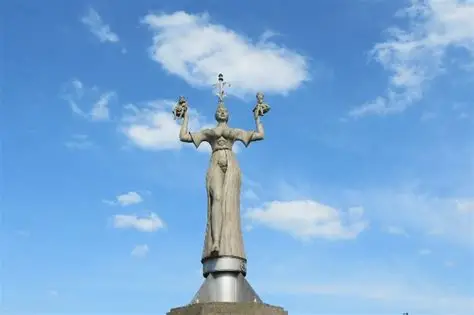
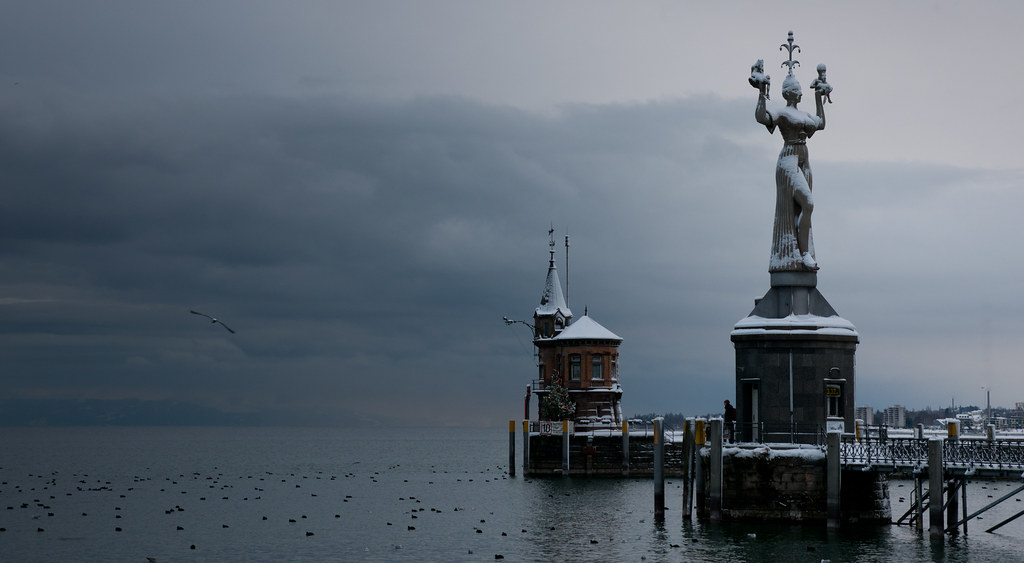
You walk out to the harbor at Konstanz and a nine-meter, eighteen-ton statue slowly rotates in front of you — a sculpted courtesan holding a naked Pope in one hand and a naked Emperor in the other, both looking distinctly foolish. This is Imperia, and she's been quietly, satirically judging Konstanz's visitors since 1993. Konstanz sits directly on the German-Swiss border at the edge of Lake Constance (the Bodensee), and it has an unusually intact medieval old town for a reason: Allied forces deliberately avoided bombing it during WWII, unwilling to risk stray bombs landing across the border in neutral Switzerland.
This is not a typical lakeside town.
Konstanz is Imperia (that rotating, satirical harbor statue, and the story of the historic church council she mocks). It's the Council of Constance (a genuinely major moment in Catholic Church history, held right here from 1414 to 1418). It's a city split by an international border (walk far enough and you'll cross into Switzerland without even a checkpoint). And it's Lake Constance itself (boat trips, flower-covered Mainau Island, and views stretching toward the Alps).
Here's everything you need to know.
The Konstanz Moments That'll Stay With You
Watching Imperia Slowly Turn The statue completes a full rotation every four minutes, so no matter where you're standing at the harbor, you'll eventually get a clear view of the Pope and Emperor helpless in her hands — a genuinely funny piece of public satire hiding a real history lesson.
Realizing You've Walked Into Switzerland Konstanz sits directly against the Swiss border, and in places the transition is genuinely seamless — no dramatic checkpoint, just a different country on the other side of an ordinary street.
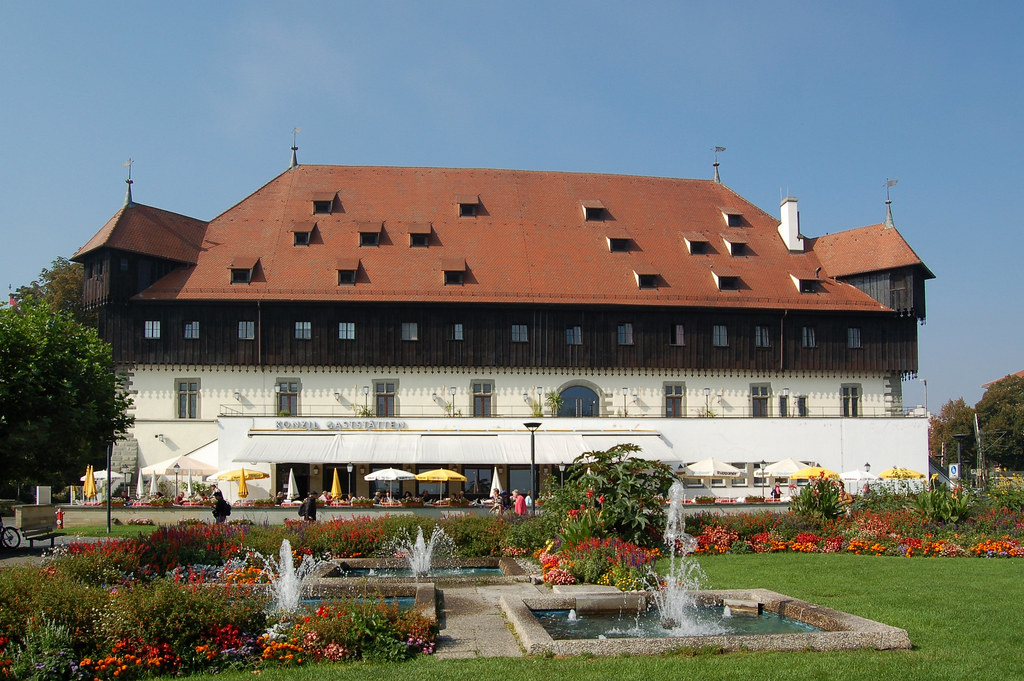
Standing Where the Council of Constance Met The Konzilgebäude, the actual building where the council convened between 1414 and 1418 to end the Western Schism (a period when Europe had two, sometimes three, competing popes), still stands by the harbor.
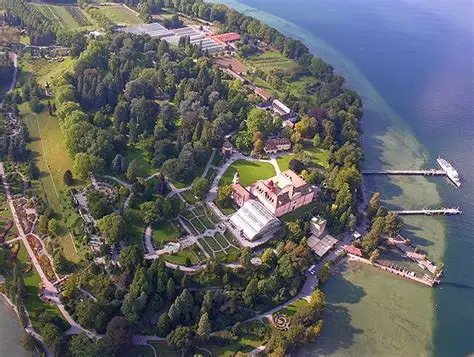
A Boat Trip to Mainau Island A short ride out onto Lake Constance to an island covered in gardens and flowers, with a castle at its center — a genuinely lovely contrast to the old town's medieval streets.
Getting There and Getting Around
Konstanz sits on the northwestern shore of Lake Constance (the Bodensee), directly on the German-Swiss border, with Austria's shore of the same lake also nearby — a genuine three-country corner of Europe. The old town is compact and walkable, centered around the harbor, the Münster, and the medieval Niederburg quarter.
Getting around once you're there:
- The old town and harbor are walkable from each other
- Boats run regularly out onto Lake Constance, including to Mainau Island and other lakeside towns
- The pedestrian-friendly downtown sits just a couple of minutes from the harbor
The Top Attractions
Imperia A nine-meter, eighteen-ton rotating concrete statue at the harbor entrance, created by sculptor Peter Lenk in 1993 — a satirical commemoration of the Council of Constance, depicting a courtesan holding a naked Pope and Emperor, symbolizing the era's tangled mix of power and morality. It rotates fully every four minutes, visible from the harbor, the boardwalk, or the water.
Konstanz Minster (Münster) The city's cathedral, at the heart of the old town, with a history stretching back centuries and genuinely good views from its tower for anyone willing to climb.

Konzilgebäude (Council Building) The actual building on the harbor where the Council of Constance convened from 1414 to 1418 — a genuinely significant site in Catholic Church history, since this council successfully ended the Western Schism, a period when Europe had competing rival popes at the same time.
Mainau Island A short boat ride from Konstanz, an island in Lake Constance covered in elaborate gardens, flowers, and a baroque castle — a genuinely beautiful, relaxed contrast to the old town's medieval streets and history.
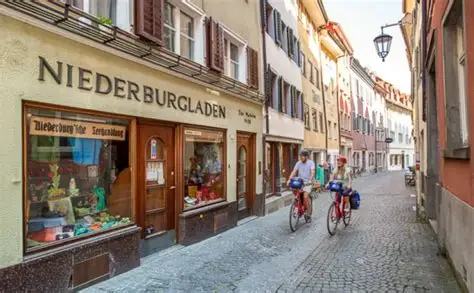
Niederburg Quarter Konstanz's oldest neighborhood, a genuine maze of narrow medieval lanes near the Rhine's outlet from the lake — since the city escaped WWII bombing, this district retains an unusually intact medieval character rare among German cities of comparable size.
A City on Three Countries' Doorstep
Lake Constance touches Germany, Switzerland, and Austria, with tiny Liechtenstein a short drive further on — genuinely one of the more unusual geographic quirks in Europe. From Konstanz specifically, walking or driving into Switzerland is often nearly seamless, without a dramatic border crossing, a small but memorable detail for anyone used to more clearly marked international boundaries.
Practical Tips
English is spoken reasonably well in the tourist core. Because Konstanz sits right against the Swiss border, it's worth carrying ID if you plan to wander across, even casually — border checks are rare within the Schengen Area but not impossible. The lake has a genuinely Mediterranean feel in good weather, drawing comparisons that surprise first-time visitors to southern Germany.
When to Visit
Spring through Fall — Good weather for the harbor, boat trips to Mainau Island, and the lake generally; this is when Konstanz's Mediterranean-adjacent charm is most apparent.
Summer — Warm, lively, and the peak season for lake activities and boat trips.
Winter — Quieter and colder, with a smaller-scale Christmas market adding some seasonal appeal to the old town.
Quick Konstanz Checklist
- Watch the Imperia statue complete a rotation at the harbor
- Visit the Konzilgebäude where the Council of Constance met
- Climb Konstanz Minster's tower
- Take a boat out to Mainau Island
- Wander the medieval lanes of the Niederburg quarter
The Bottom Line
Konstanz offers a genuinely unusual combination — an unusually intact medieval old town (thanks to its Swiss neighbor), major Catholic Church history, a flower-covered island getaway, and one of the more memorable pieces of satirical public art in Germany, all sitting at the corner of three countries on one of Central Europe's largest lakes.
Planning day trips from your base? See our Day Trips guide for more destinations within driving distance, and our PCS Guide to Germany for everything else about settling in.