

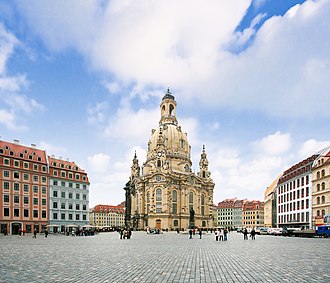
You arrive in Dresden and see two cities at once—the reconstructed baroque masterpieces that survived WWII's devastation, and the vibrant student town that pulses with young energy. The Frauenkirche (Church of Our Lady) dominates the skyline, rebuilt stone by stone after being bombed to rubble in 1945. You walk through the Zwinger Palace courtyard—baroque architecture so elaborate it seems impossible. Students hop on and off the Straßenbahn (tram), zipping across the city efficiently. The Elbe River flows through Dresden, tree-lined paths perfect for cycling. You cross to Neustadt—street art, student cafés, alternative culture, affordable beer. You stand before the Semperoper (opera house) at golden hour, light hitting restored facades. You visit Striezelmarkt, Germany's oldest Christmas market. You learn Dresden's story: destroyed in one night (February 13, 1945), rebuilt for decades, now thriving again. This is Dresden—"Florence on the Elbe," a city that refused to stay dead, where baroque grandeur meets university town energy, where history weighs heavy but life wins anyway.
This is not Munich or Berlin.
Dresden is the phoenix city (bombed flat in WWII, rebuilt stone by stone, resurrection made visible). It's the Frauenkirche miracle (church reduced to 30-foot rubble pile in 1945, reconstructed 1994-2005, now Dresden's symbol). It's baroque overload (Zwinger Palace, Semperoper, Hofkirche—Augustus the Strong made Dresden magnificent). It's university town vibes (TU Dresden students everywhere, young energy, affordable, relaxed). It's the Neustadt scene (alternative district, street art, cafés, nightlife). It's Straßenbahn efficiency (excellent tram system, goes everywhere, students love it). And it's deeply moving—the story of Dresden's destruction and rebirth hits differently when you're standing there.
I've been here many times. The student energy surprised me first—this isn't a museum city, it's alive. The Frauenkirche story gives me chills every visit. The baroque architecture is stunning. The Elbe River paths are perfect for wandering. The trams make everything accessible. Markets and festivals fill the calendar. You'll see the before-and-after photos. You'll ride the Straßenbahn with students. You'll understand why Dresden rebuilt itself exactly as it was. You'll feel the weight of history and the lightness of present life coexisting.
Here's everything you need to know.
The Dresden Moments That'll Stay With You
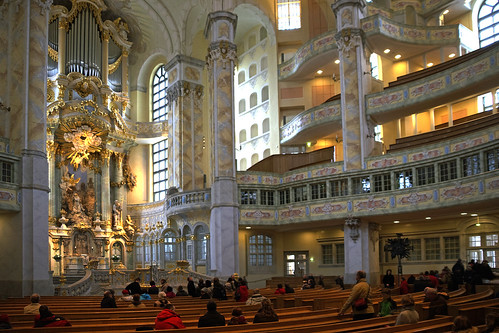
Inside the Frauenkirche You walk into the Church of Our Lady (Frauenkirche). The interior glows—creamy white and gold, soaring dome, baroque beauty. Then you notice—darker stones scattered throughout the white walls. These are original stones from 1945, blackened by fire, incorporated into the rebuild. You're standing inside a church that was a 30-foot rubble pile for 50 years. The weight of that hits you. This is resurrection made stone.
Zwinger Palace Courtyard at Sunset You enter the Zwinger Palace courtyard. Baroque buildings surround you—elaborate facades, sculptures, fountains, pavilions. The architecture is almost too much—every surface decorated, every corner detailed. Golden hour light hits it all. Students sit on the grass studying. This is Dresden—baroque grandeur meets everyday student life. Augustus the Strong built this to flex. It worked.
Student Life in Neustadt You cross the Elbe to Neustadt (New Town) on the Straßenbahn. Suddenly everything changes—street art covers walls, alternative cafés line streets, students fill every corner. Kunsthofpassage (decorated courtyards) display whimsical tile work. Beer is €3. Someone's playing guitar. This isn't tourist Dresden—this is where Dresden lives. The university town energy is real.
The Bombing Photos at City Museum You're looking at before-and-after photos of Dresden. Before: baroque masterpiece, "Florence on the Elbe," one of Europe's most beautiful cities. After (February 14, 1945): absolute devastation, 90% of city center destroyed, 25,000+ dead, Frauenkirche a smoking pile of rubble. The contrast is staggering. Then you walk outside and see it rebuilt. The resilience is humbling.
Riding the Straßenbahn with Students You're on tram line 4, heading from Hauptbahnhof to Neustadt. Students pile on with bikes and backpacks. The tram glides smoothly, efficiently. You pass baroque buildings, cross the Elbe, arrive in minutes. You realize—this is how Dresden works. The tram system connects everything. Students use it constantly. It's fast, cheap, reliable. Very German.
Frauenkirche – The Church That Rose from Rubble
The Frauenkirche (Church of Our Lady) is Dresden's symbol—baroque Lutheran church with distinctive stone dome, destroyed in WWII, rebuilt 1994-2005.
The Story:
Built: 1726-1743 by George Bähr
Style: Protestant baroque with 95-meter stone dome (largest north of the Alps at the time)
February 13-15, 1945: Allied bombing firestorm destroys Dresden. Frauenkirche burns for two days. On February 15, the dome collapses. The church becomes a 30-foot-high pile of blackened rubble.
1945-1989: East Germany leaves the ruins as a war memorial—a pile of stones in the center of Dresden reminding everyone of destruction.
1989: Berlin Wall falls. Reconstruction efforts begin.
1994-2005: Complete reconstruction. Original stones recovered from rubble, catalogued, reused where possible (40% of exterior uses original stones). Donations from around the world fund it. British citizens (whose country bombed Dresden) donate significantly. The golden cross on top is a gift from Britain.
October 30, 2005: Frauenkirche reconsecrated. Dresden celebrates.
Why It Matters:
This isn't just a rebuilt church. It's a symbol of reconciliation, resilience, and hope. The darker stones visible in the walls are original—blackened by fire in 1945, now part of the rebuild. You can literally see history in the stones.
The British donation of the golden cross is particularly moving—former enemies funding restoration of what they destroyed.
Visiting:
Entry: Free (donations encouraged)
Dome climb: €8, 360° views over Dresden
Hours: Monday-Friday 10am-12pm & 1pm-6pm (closes during services)
Time needed: 30-45 minutes inside, 1 hour if climbing dome
What to see:
- The dome interior – Stunning baroque decoration
- Dark stones – Original 1945 stones integrated into walls
- Altar – Reconstructed from fragments
- Crypt – Small museum showing reconstruction process
Pro tips:
Read the history first – Context makes it powerful
Look for dark stones – They're scattered throughout
Go early – Peaceful before crowds
Attend a concert – Acoustics are incredible
Respect the space – It's a working church and memorial
Worth it? Absolutely. Even if you've seen many churches, the Frauenkirche story and the visible integration of destroyed original stones make this different. It's not just about beauty—it's about survival.
Baroque Dresden – Augustus the Strong's Legacy
Zwinger Palace
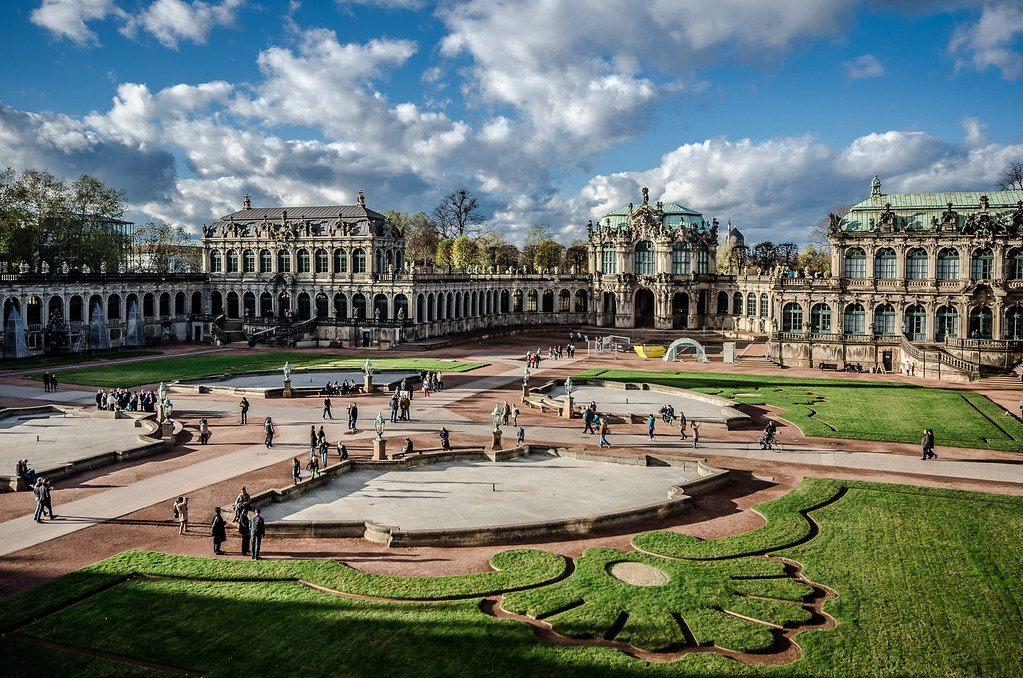
The Zwinger is a baroque palace complex with elaborate pavilions, fountains, and museums surrounding a central courtyard.
Built: 1710-1728 by Augustus the Strong (Elector of Saxony, King of Poland, absolute unit)
Purpose: Originally built for court festivities and tournaments (basically to show off Saxon wealth and power)
Architecture: Late baroque/rococo, incredibly ornate, almost excessive in decoration
What's here now:
- Old Masters Picture Gallery – Raphael's Sistine Madonna, works by Rembrandt, Vermeer, Rubens
- Porcelain Collection – Augustus the Strong's obsession with Asian porcelain (he had a problem)
- Royal Cabinet of Mathematical and Physical Instruments – Historic scientific tools
- The courtyard itself – Free to enter, students study here, tourists photograph
Visiting:
Entry: Courtyard free, museums €12-14 each
Time: 1 hour for courtyard and exterior, 2-3 hours if visiting museums
Best time: Early morning or late afternoon for light and fewer crowds
Pro tips:
Old Masters Gallery – Don't miss Sistine Madonna
Sit in courtyard – Free, beautiful, people-watch
Nymphs' Bath Fountain – Most photographed feature
Combo ticket – If visiting multiple museums
Why students love it: The courtyard is a free, beautiful place to study or hang out. You'll see students with laptops sitting on the grass. That's Dresden—baroque beauty meets everyday student life.
Semperoper (Opera House)
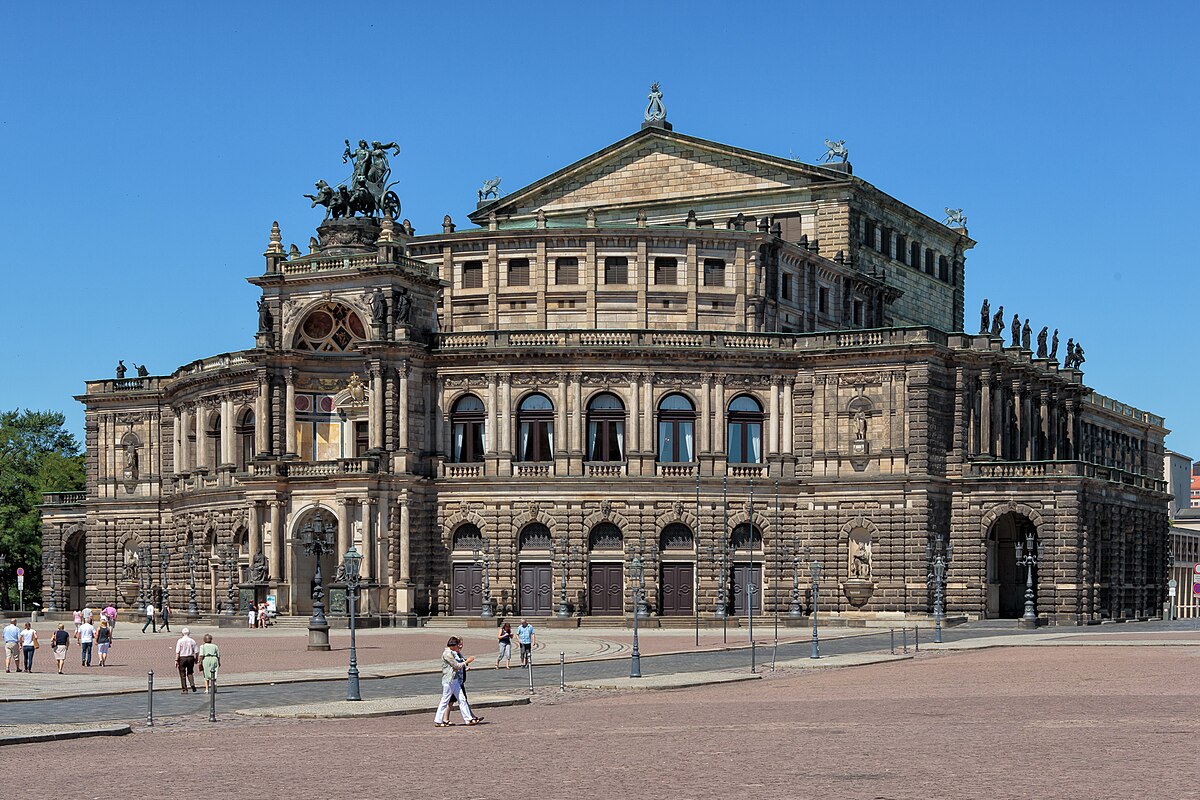
The Semperoper is one of the world's most beautiful opera houses.
Built: Originally 1841, rebuilt 1871-1878 after fire, destroyed 1945 in bombing, rebuilt 1977-1985
Architect: Gottfried Semper
Style: Neo-Renaissance
Why it's famous:
- World premiere venue for Wagner operas (Flying Dutchman, Tannhäuser) and Richard Strauss (Salome, Der Rosenkavalier)
- Stunning interior (gold, red velvet, elaborate decoration)
- Excellent acoustics
- Survived multiple destructions, rebuilt each time
The 1945 story: The Semperoper burned during the February bombing. For decades, it stood as ruins. East Germany finally rebuilt it 1977-1985 (even communist governments valued culture). Reopened with same opera as original 1841 opening: Weber's Der Freischütz.
Visiting:
Tours: €13, 45 minutes, multiple times daily (book ahead)
Performances: Opera, ballet, concerts (tickets €20-200+)
Worth it? Even if you don't love opera, the building is stunning. Tour lets you see the interior (otherwise only accessible with performance ticket). If you like opera/ballet, a performance here is unforgettable.
Pro tip: Stand in Theaterplatz (square in front of Semperoper) at sunset. The golden light on the opera house, with the Zwinger and Hofkirche visible—this is the "Florence on the Elbe" moment.
Hofkirche (Cathedral)
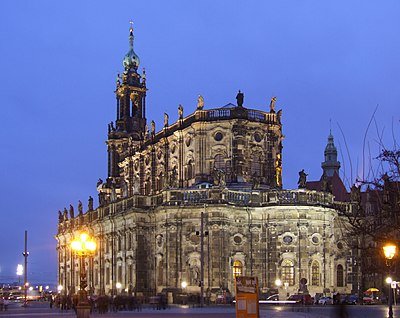
Dresden's Catholic cathedral, right next to the palace.
Built: 1739-1755 (also by Augustus the Strong, who converted to Catholicism to become King of Poland)
Style: Baroque
Features: 78 stone saints on the balustrade, crypt with Saxon royalty tombs, beautiful pipe organ
Entry: Free
Worth it: Beautiful baroque interior, less crowded than Frauenkirche, free.
Neustadt – Dresden's Student Quarter

Neustadt (literally "New Town") is across the Elbe from the baroque Old Town. This is where students live, where alternative culture thrives, where Dresden feels young.
What Makes Neustadt Special:
University energy – TU Dresden (Technische Universität Dresden) students everywhere
Affordable – Beer €3-4, food cheaper than Old Town, student budgets work here
Alternative culture – Street art, independent shops, creative scene, counterculture vibe
Nightlife – Bars, clubs, live music until dawn
Kunsthofpassage – Series of decorated courtyards with whimsical art installations
Relaxed vibe – Less touristy, more local, real Dresden
Kunsthofpassage
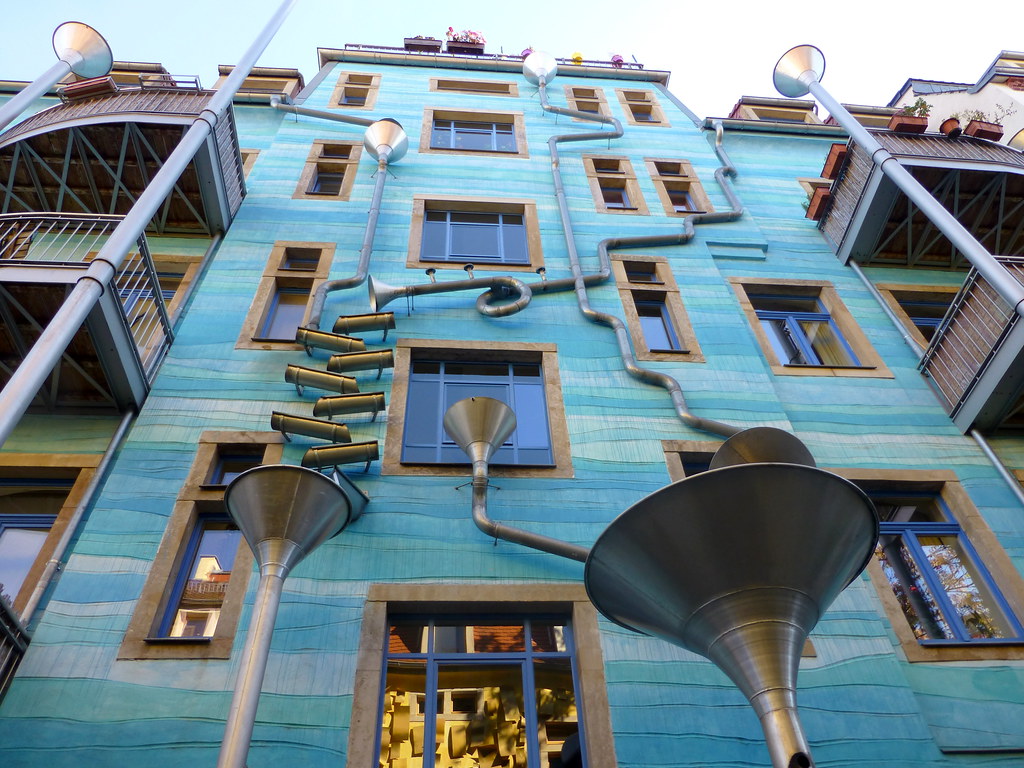
A series of five courtyards decorated with artistic installations. Unique, photogenic, quintessentially Neustadt.
Highlights:
Courtyard of Elements – Building facade covered with drainpipes that create music when it rains (yes, really)
Courtyard of Light – Colorful mirrors and glass installations
Courtyard of Mythical Creatures – Whimsical animals in tile work
Courtyard of Metamorphoses – Surreal art
Entry: Free, outdoor, always accessible
Location: Between Görlitzer Straße and Alaunstraße
Time: 20-30 minutes to explore all courtyards
Why it's great: Quirky, photogenic, free, gives you instant feel for Neustadt's creative energy. Students hang out here. You'll want to photograph everything.
Neustadt Cafés & Bars:
Café 100 – Student favorite, good coffee, cheap, cozy
Planwirtschaft – Restaurant/bar, local crowd, hearty German food
Scheune – Alternative cultural center, concerts, club nights, students love it
Katy's Garage – Dive bar, rock music, cheap beer, no pretension
Lloyd's – Café by day, bar by night, always full
Hechtviertel area – Concentration of bars, restaurants, nightlife
Pro tip: Just wander Neustadt at night. Duck into whatever bar or café looks interesting. That's how you find the best spots. Follow the students—they know where the good cheap beer is.
Why Students Love Dresden:
Affordable – Compared to Munich, Berlin, Hamburg, Dresden is cheap (rent, food, beer all reasonable)
TU Dresden – Excellent technical university, strong engineering/sciences
Livable – Not too big (550,000 people), not too small, bikeable, walkable, manageable
Beautiful – You study in a city with baroque architecture, river paths, mountains nearby
Straßenbahn – Tram system makes living without car easy
Culture – Opera, museums, music scene, festivals
Quality of life – Parks, Elbe River, outdoor spaces, less stressful than big cities
You'll notice the student energy everywhere—bikes everywhere, young people in cafés at all hours, affordable prices, relaxed atmosphere, group study sessions in parks. This isn't a stiff, formal German city. It's alive, young, accessible.
Getting Around Dresden – Straßenbahn Made Easy
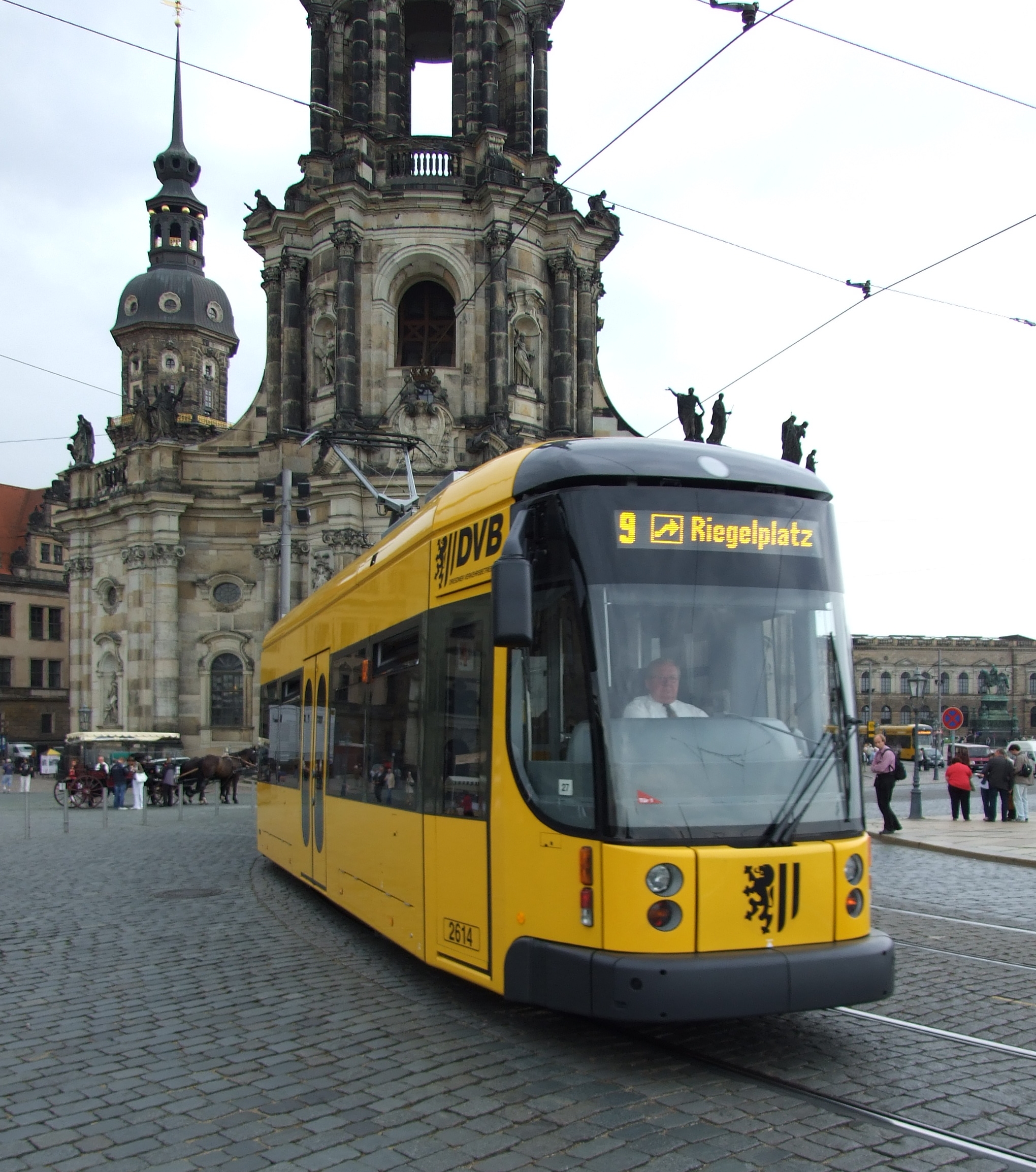
Dresden's Straßenbahn (tram system) is excellent—efficient, punctual, covers the entire city. This is how Dresden works.
How the Trams Work:
Network: 12 tram lines crisscross Dresden
Frequency: Every 5-10 minutes on main lines, even better during rush hour
Hours: 5am-midnight (night trams on weekends)
Speed: Fast—dedicated lanes, rarely stuck in traffic
Cleanliness: Modern trams, well-maintained, comfortable
Navigation: Routes clearly marked, stops announced (in German), easy to follow
Students everywhere: Trams full of TU Dresden students, bikes on board, backpacks, laptops
Tickets:
Single ticket (Einzelfahrkarte): €2.50 (valid 1 hour, any direction, transfers allowed)
Short trip (Kurzstrecke): €1.50 (4 stops or less)
Day ticket (Tageskarte): €6.50 (unlimited until 4am next day)
4-trip ticket: €9 (save €1 if making multiple trips)
Weekly pass: €22.50 (if staying longer)
Family day ticket: €11 (up to 2 adults + 4 kids—bargain)
Where to buy:
- Ticket machines at stops (cash or card)
- On some trams (newer models have machines)
- DVB app (easiest—buy on phone)
Validation: Stamp ticket in yellow machine on platform or in tram (first time only)
Key Tram Lines for Tourists/Students:
Line 4 – Hauptbahnhof (main station) → Old Town → Neustadt → most useful line
Line 8 – Goes to Hellerau (Garden City, UNESCO site)
Line 11 – Old Town → Blasewitz (Blue Wonder Bridge area)
Line 3 – Connects to suburbs, TU Dresden campus
Pro Tips:
Download DVB app – Buy tickets on phone, no cash/machines needed
Day ticket best value – If making 3+ trips
Trams are PUNCTUAL – Germans don't mess around, arrive on time
Bikes allowed – Extra ticket needed (€1.50), designated bike areas in tram
Ticket checks – Controllers in plain clothes randomly check, hefty fine if no ticket (€60)
Press button to open doors – Doors don't open automatically at every stop
Google Maps works – Shows tram routes, times, which stop to get off
Why students love it: Cheap (day pass €6.50 covers EVERYTHING), fast (dedicated lanes beat traffic), reliable (Germans = punctual), goes everywhere (no car needed), bike-friendly. You can live in Dresden without a car easily. Students use trams constantly.
Compared to other cities: Better than Berlin's U-Bahn (cleaner, easier), similar to Munich (efficient, punctual), way better than most European cities. Dresden nailed public transit.
The Elbe River – Dresden's Outdoor Living Room
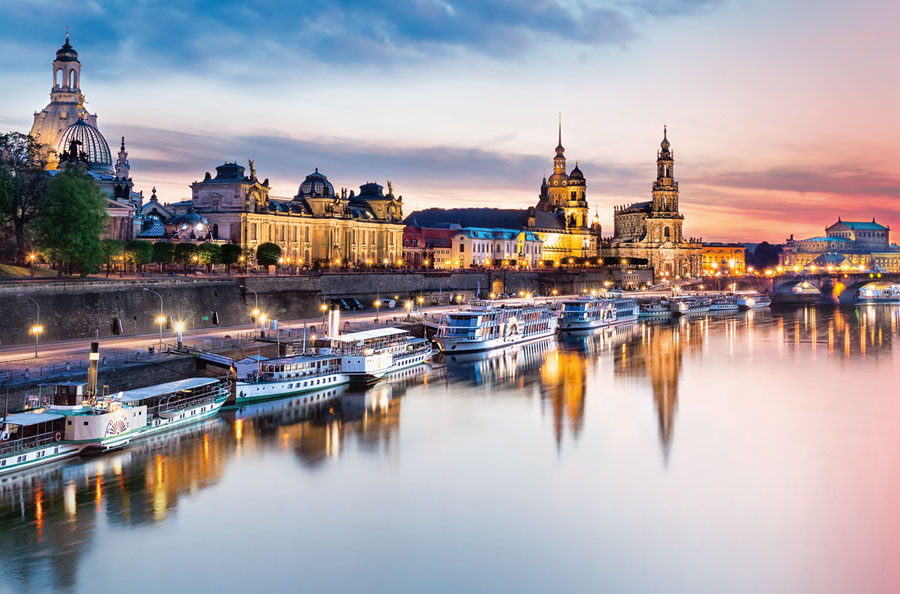
The Elbe River flows through Dresden, creating the "Florence on the Elbe" nickname. The riverbanks are Dresden's outdoor space.
Elbe River Activities:
Cycling – Flat, paved paths on both sides of river. Rent bikes (€10-15/day) or use Dresden bike share.
Walking/jogging – The Elbe promenade is lovely year-round, especially in good weather.
Picnicking – Locals spread out on the grass (Elbwiesen meadows), drink beer, watch sunset. Very German.
Elbe River Cruises – Historic paddle steamers cruise between Dresden and Meissen, Bad Schandau, Czech border (€15-30).
Summer swimming – Some brave locals swim in the Elbe (not officially encouraged but people do it, water quality debated).
Beach bars – Pop-up beach clubs in summer (sand, lounge chairs, drinks).
Best Views & Spots:
Brühl's Terrace – Called the "Balcony of Europe" (Goethe said that), overlooks the Elbe, beautiful promenade
Augustus Bridge – Historic bridge connecting Old Town and Neustadt, great photo spot
Blue Wonder Bridge (Blaues Wunder) – Historic suspension bridge upstream, engineering marvel, pretty area
Elbwiesen meadows – Open green spaces along river, perfect for picnics, students hang out here constantly
Pro tip for students: In summer, grab beer/wine from Späti (corner store), sit on Elbwiesen, watch sunset with friends. That's peak Dresden student life. Costs €5, feels priceless.
Striezelmarkt – Germany's Oldest Christmas Market
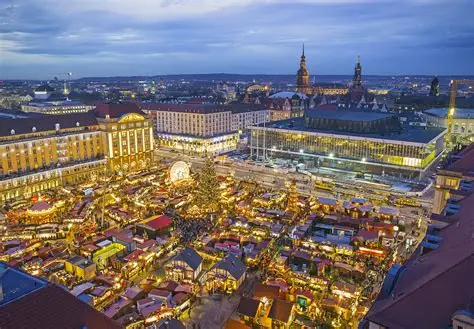
Striezelmarkt is one of Germany's oldest Christmas markets—documented since 1434 (yes, nearly 600 years). "Striezel" refers to Dresdner Stollen, the Christmas bread invented in Dresden.
What Makes It Special:
History – 590+ years of continuous operation (except war years)
Giant Christmas Pyramid – 14.6 meters tall (world's tallest Christmas pyramid), hand-carved, slowly rotates, dominates the market
Dresdner Christstollen – The ORIGINAL stollen (invented in Dresden 1400s), traditional Dresden Christmas bread
Less commercialized – More authentic than many German Christmas markets
Location – Altmarkt (Old Market Square), right in city center, easy tram access
Scale – 240+ stalls, huge market
What to Eat/Buy:
Dresdner Christstollen – Traditional Christmas bread (dried fruit, marzipan, powdered sugar), buy a whole loaf (keeps for weeks)
Glühwein – Mulled wine in collectible ceramic mugs (€3-4 including mug deposit)
Pflaumentoffel – Prune people (Dresden specialty—figurines made from prunes, traditional Saxon craft)
Erzgebirge Nutcrackers – Traditional wooden nutcrackers from nearby Ore Mountains region
Schwibbogen – Carved wooden arches with candles (Saxon tradition)
Reibekuchen – Potato pancakes with applesauce
Gebrannte Mandeln – Roasted almonds (addictive)
The Stollenfest:
Second Saturday of Advent, Dresden celebrates Stollenfest—parade with giant Stollen (weighs 3+ tons), historic costumes, traditional ceremony. If you're there this weekend, don't miss it.
Visiting:
Dates: Late November through December 24
Hours: 10am-9pm daily
Cost: Free to enter market, budget €20-30 for food/drinks/shopping per visit
Tram access: Lines 1, 2, 4 to Altmarkt stop (you'll see the crowd)
Pro tips:
Buy Stollen to take home – It's THE authentic Dresden souvenir
Collect the mugs – Each year unique design, €3-4 deposit (keep or return)
Weekday evenings less crowded – Weekends packed with tourists
Evening best for photos – Pyramid lit up, market glowing
Markets, Festivals & Dresden's Event Calendar
Dresden loves festivals. The city has events year-round.
Annual Events:
Dresden Music Festival (May-June) – Classical music concerts in historic venues
Elbhangfest (June) – Huge outdoor festival along Elbe slopes, music, food, art, locals love it
Dresden City Festival (August) – Three-day party on the Elbe, stages, food, hundreds of thousands attend
Filmnächte am Elbufer (July-August) – Outdoor cinema on the Elbe riverbank, films + live music
Dresden Striezelmarkt (November-December) – Christmas market (covered above)
Semperoper Ball (February) – If you're fancy and have €250+ for a ticket, attend Dresden's most elegant event
Weekly Markets:
Lingnermarkt – Saturday farmers market, local produce, students shop here
Neustadt Markthalle – Indoor market hall, food vendors, multicultural, open daily
Why it matters: Dresden isn't just baroque museums. The festival calendar is packed. Students and locals attend everything. The city knows how to celebrate.
Museums – World-Class Collections
Dresden has incredible museums (many in Zwinger or Royal Palace).
Green Vault
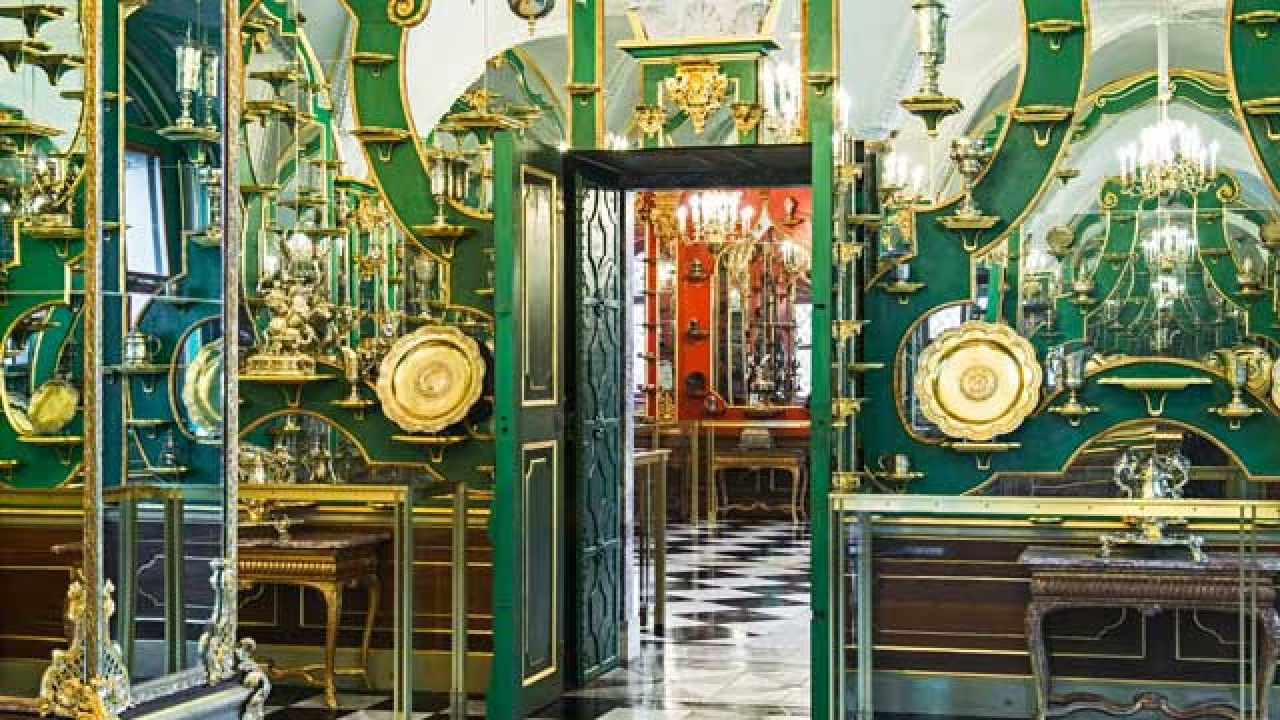
Grünes Gewölbe (Green Vault) in the Royal Palace—one of Europe's most spectacular treasure chambers. Augustus the Strong's collection of ridiculous wealth.
What it is: Gold, jewels, ivory, precious stones, intricate art objects
Two sections:
- Historic Green Vault – Reconstructed baroque rooms displaying objects as Augustus arranged them, immersive experience (timed entry, book ahead, €14)
- New Green Vault – Modern museum display focusing on individual treasures (€14)
Famous pieces:
- Court of Delhi on the Birthday of the Grand Mogul – Miniature scene with 5,223 diamonds, 175 emeralds, 189 rubies, 53 pearls (insane detail)
- Dresden Green Diamond – 41-carat natural green diamond, extremely rare
- Golden Coffee Service – Augustus the Strong was extra
Worth it? If you like treasure chambers and intricate craftsmanship, absolutely mind-blowing. If museums bore you, skip it.
Other Museums Worth Considering:
Albertinum – Modern art, German Romanticism (Caspar David Friedrich paintings)
Transport Museum – For train/car/tech enthusiasts, housed in beautiful building
Military History Museum – Daniel Libeskind-designed building (architecture alone worth it), comprehensive exhibits on war history
Panometer Dresden – Giant 360° panoramic painting of Dresden bombing (powerful)
Hygiene Museum – Weird name, actually fascinating museum about human body, health, society
Dresden Food & Drink Scene
Traditional Saxon Food:
Sauerbraten – Marinated pot roast (slightly sour, served with red cabbage)
Kartoffelsuppe – Potato soup (hearty, German comfort food)
Quarkkäulchen – Fried potato-quark pancakes (Saxon specialty, sweet or savory)
Eierschecke – Saxon cheesecake-ish dessert (three layers, very sweet, very good)
Where to Eat (Student Budget):
Curry & Co – Currywurst, cheap, students love it
Döner stands – Everywhere in Neustadt, €4-5, late-night student fuel
Mensa (TU Dresden cafeterias) – If you know a student, eat here (€3-5 meals, open to public technically)
Asia markets/restaurants – Neustadt full of cheap Vietnamese, Thai options
Where to Eat (Traditional):
Pulverturm an der Frauenkirche – Traditional Saxon food, good location
Sophienkeller – In Taschenbergpalais, baroque cellar restaurant, touristy but good
Ball- und Brauhaus Watzke – Brewery restaurant, hearty portions
Where to Drink:
Student bars in Neustadt – Katy's Garage, Groove Station, anywhere on Louisenstraße
Breweries: Feldschlößchen (Dresden brewery), Watzke, Rechts der Isar (Bavarian beer garden vibe)
Späti culture – Corner stores ("Spätkauf" or "Späti") sell cheap beer (€1-2), common to buy beer and drink outside (legal in Germany)
Dresden on a Budget (Student Style)
Dresden is one of Germany's most affordable cities. Students thrive here.
What Things Cost:
Restaurant meal: €8-15 (student places) or €12-25 (nice places)
Beer: €3-4 at bars, €1-2 at Späti
Coffee: €2-4
Döner: €4-5
Straßenbahn day pass: €6.50
Museum: €8-14
Hostel: €20-30/night
Budget hotel: €50-80/night
Budget Tips (Student-Tested):
Buy day pass – Unlimited tram access €6.50
Eat döner – Filling, cheap, everywhere in Neustadt
Buy beer at Späti – €1-2 vs €3-4 at bars
Student discounts – If you have student ID, use it everywhere
Free stuff – Zwinger courtyard, Frauenkirche entry, Elbe walks, Kunsthofpassage
Lunch specials – Many restaurants have €6-8 lunch deals
Daily budget:
- Backpacker/student: €40-60 (hostel, döner/cheap food, some attractions)
- Budget: €70-100 (budget hotel, mix of cheap/nice meals, museums)
- Mid-range: €120-180 (nice hotel, restaurants, all museums)
For students: You can eat, drink, and have fun in Dresden for €30-40/day easily. That's why students love it here.
Getting to Dresden
By Train:
From Berlin: 2 hours direct (frequent trains)
From Prague: 2.5 hours direct (scenic route through Saxon Switzerland)
From Munich: 5.5 hours (change in Nuremberg usually)
From Leipzig: 1.5 hours
German trains (Deutsche Bahn) are generally punctual, clean, comfortable.
Dresden Hauptbahnhof:
Main train station, modern, central. Tram lines 3, 7, 8, 9, 11 connect to city center (5-10 minutes to Old Town).
When to Visit Dresden
Spring (April-May) – Beautiful weather, outdoor cafés open, festivals starting, students everywhere enjoying sunshine
Summer (June-August) – Best weather, Elbhangfest, City Festival, Elbe river life, outdoor cinema, peak season
Fall (September-October) – Comfortable temperatures, fewer tourists, autumn colors along Elbe
Winter (November-December) – STRIEZELMARKT! Christmas market season, magical, cold but worth it
Recommendation: June-August for festivals and Elbe river life. December for Striezelmarkt Christmas market. April-May for good weather and fewer tourists.
University semester: Students visible October-February and April-July. August-September quieter (semester break).
The Bottom Line on Dresden
Dresden is the city that shouldn't exist—90% destroyed in one night, left in ruins for decades, rebuilt stone by stone with obsessive German precision. Now it's thriving. The Frauenkirche stands again, darker stones visible in its walls telling the story. The Zwinger's baroque excess dazzles. The Semperoper hosts world-class performances. Students fill Neustadt with energy and affordable fun. The Straßenbahn whisks you efficiently anywhere. The Elbe provides outdoor space and that "Florence on the Elbe" romantic vibe.
The university town feeling surprised me most. This isn't a museum city frozen in time—it's young, alive, accessible, affordable. Students everywhere, cycling to class, sitting in Zwinger courtyard studying, filling Neustadt bars at night, swimming in the Elbe in summer. That combination of heavyweight history and lightweight student energy makes Dresden unique.
My advice? Spend 2-3 days minimum. Visit the Frauenkirche early—read the story, look for the dark stones, climb the dome. Tour the Zwinger and Semperoper (book ahead). Take a Straßenbahn to Neustadt, wander Kunsthofpassage, find a student bar. Walk or cycle the Elbe paths. If December, Striezelmarkt is non-negotiable. Buy Stollen. Use the trams constantly—they're excellent. Let Dresden surprise you with how alive it is.
The phoenix rose from the ashes. Now it's filled with students, baroque beauty, and a tram system that actually works.
Quick Dresden Checklist
Must-Do:
- Frauenkirche (see the dark stones!)
- Zwinger Palace courtyard
- Semperoper (tour or performance)
- Ride the Straßenbahn like a local
- Neustadt exploring (Kunsthofpassage)
- Walk/cycle the Elbe River paths
- Striezelmarkt (if November-December)
- Student bar in Neustadt (cheap beer!)
If You Have Time:
- Green Vault treasure chambers
- Brühl's Terrace (Balcony of Europe)
- Blue Wonder Bridge area
- Elbhangfest or City Festival (if visiting in summer)
- Panometer Dresden (bombing panorama)
- Day trip to Saxon Switzerland National Park
Don't Miss:
- Frauenkirche dark stones – History visible in the walls
- Student energy in Neustadt – This is living Dresden
- Straßenbahn efficiency – Best tram system in Germany
Student Tips:
- Buy Straßenbahn day pass (€6.50, unlimited)
- Eat döner in Neustadt (€4-5, filling)
- Buy beer at Späti (€1-2 vs €3-4 at bars)
- Sit on Elbwiesen at sunset (free, beautiful)
- Follow students to find best cheap spots
Ready for Dresden? Bring curiosity for history, appetite for student energy, and respect for a city that refused to die. The Straßenbahn awaits. Bis bald! 🇩🇪